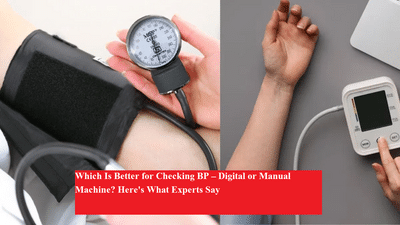
Monitoring your blood pressure (BP) is crucial for heart and overall health. But with both digital and manual BP monitors available in the market, many people are confused about which one provides more accurate readings. While hospitals still rely heavily on manual sphygmomanometers, digital monitors are gaining popularity for home use. Let’s explore the differences, advantages, and which one is best suited for you.
What Is Blood Pressure and Why Is It Important?Blood pressure refers to the force of circulating blood on the walls of the arteries. It is measured in two numbers:
- Systolic (top number): Pressure when the heart beats
- Diastolic (bottom number): Pressure when the heart is at rest
For example, a normal BP reading is around 120/80 mm Hg.
Manual BP Machines – Preferred by DoctorsHigh BP (Hypertension) increases the risk of heart attacks, strokes, and kidney failure. Low BP (Hypotension) may cause dizziness, fainting, and fatigue.
How it works:
Manual monitors include an inflatable cuff, a bulb, and a stethoscope. The cuff is wrapped around the arm, inflated, and the doctor listens to the heartbeat (Korotkoff sounds) to determine BP.
Pros:
- Considered highly accurate when used by trained professionals
- Ideal for clinical settings and critical cases
- No need for batteries or electricity
Cons:
- Requires medical training to use properly
- Not suitable for self-monitoring at home
How it works:
Digital monitors automatically inflate and display readings on a screen. No stethoscope is needed.
Pros:
- Very user-friendly, especially for elderly or solo users
- Some models store previous readings and show pulse rate
- Portable and quick to use
Cons:
- Accuracy can be affected by improper cuff placement or hand movement
- May give incorrect readings in people with irregular heartbeats (arrhythmia)
- Battery-dependent
Digital vs Manual: A Quick Comparison
| Accuracy | Very High (by professionals) | Moderate to High (depends on quality) |
| Ease of Use | Difficult for untrained users | Very easy |
| Suitable For | Doctors, clinical use | Home use, elderly |
| Portability | Moderate | High |
| Cost | Generally cheaper | Slightly expensive |
Final Verdict: Which One Should You Choose?
- If you're a healthcare professional or need precise readings in a hospital setting, the manual BP machine is your best choice.
- If you're looking for a device to monitor your BP at home, especially for elderly family members or daily tracking, a high-quality digital BP machine is more practical and convenient.