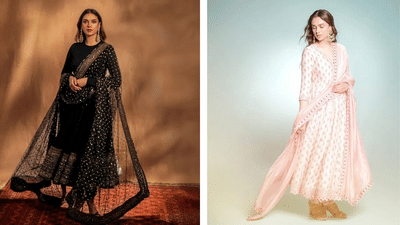
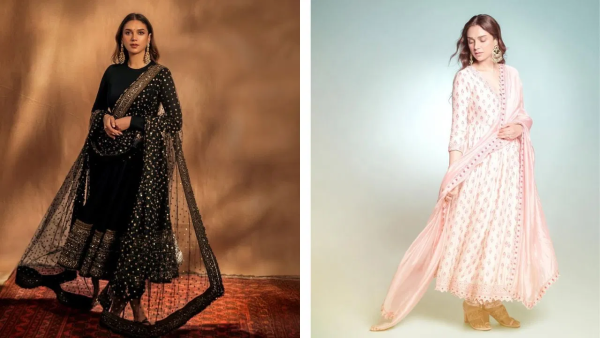
When it comes to the diverse world of Indian women's fashion, both Anarkali suits and frock suits stand out for their beauty and popularity. While they might appear similar at first glance, especially when their length extends below the knee and they're paired with churidars or leggings, they possess distinct characteristics that set them apart. Many assume them to be the same, but understanding their design, fitting, fabric, and overall aesthetic reveals significant differences.
Here are 5 key distinctions between an Anarkali suit and a frock suit:
Design and Cut: The defining feature of an Anarkali is its flared silhouette, which typically begins from the chest and spreads outwards in a voluminous manner, often incorporating numerous pleats or panels to create its signature flow. In contrast, a frock suit's cut usually originates from the waistline or sometimes the chest, flaring out in a simpler A-line or umbrella style, akin to a Western-style frock. This design tends to be more straightforward and less elaborate.
Fabric and Embellishment: Anarkalis are frequently crafted from luxurious fabrics such as net, silk, georgette, or velvet, lending themselves well to intricate embellishments like embroidery, zari work, or gota-patti. Frock suits, on the other hand, are often made from lighter, more breathable materials like cotton, rayon, or lightweight georgette. They commonly feature prints or subtle button patterns, emphasizing comfort and simplicity over heavy ornamentation.
Fitting and Overall Look: An Anarkali is typically fitted snugly around the bust and upper torso before flowing gracefully outwards, creating a regal and elegant appearance. A frock suit, conversely, offers a more relaxed and comfortable fit throughout, providing a simple yet charming and casual aesthetic.
Construction Method: The construction of an Anarkali is more complex, often involving the cutting and joining of multiple 'kali' (panels or buds) to achieve its expansive flare. A frock suit is generally simpler to construct, essentially combining a blouse-like top with a skirt-like hem. The intricate tailoring of an Anarkali makes it a more formal garment, often preferred for weddings, functions, or parties, while a frock suit is more suited for casual outings.
Accessories and Styling: Styling an Anarkali often necessitates complementary accessories such as heavy earrings, traditional juttis, and a well-draped dupatta to complete its grand look. A frock suit offers more versatility in styling; it can be effortlessly worn without a dupatta and pairs well with casual footwear like ballerinas or sandals, reflecting its laid-back appeal.