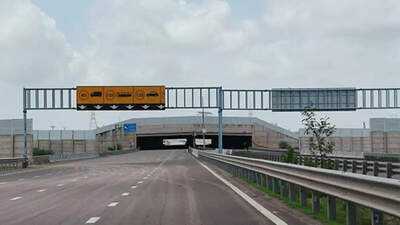
 Introduction to the Wildlife Corridor
India is making strides in enhancing its road infrastructure, particularly with the recent development of a 12-kilometer wildlife corridor along the Delhi-Mumbai Expressway. This corridor is strategically located near the Rajaji National Park.
A Groundbreaking Initiative
The National Highways Authority of India (NHAI) has pioneered the country's first dedicated wildlife corridor on a national highway, merging infrastructure growth with environmental stewardship.
Design Features of the Corridor
This 12-kilometer segment of the expressway traverses the buffer zone of the Ranthambore Tiger Reserve and includes five wildlife overpasses along with India's longest underpass, designed to ensure safe passage for animals.
Protecting Wildlife
This initiative represents a significant shift in expressway design in India, focusing not only on human transportation but also on safeguarding the habitats of various wildlife, including tigers and bears. The corridor was developed with insights from the Wildlife Institute of India and the Ministry of Environment and Forests, situated in an ecologically diverse area between Ranthambore and Chambal Valley.
Challenges and Solutions
Pradeep Attri, the Regional Officer at NHAI, noted that this stretch posed considerable challenges due to its location within the Ranthambore Wildlife Sanctuary, which is rich in biodiversity. Careful measures were taken during construction to ensure the coexistence of wildlife and the highway.
Innovative Construction Techniques
Under the guidance of the Wildlife Institute of India, five wildlife overpasses were constructed, maintaining the natural landscape to facilitate animal movement. Each overpass spans 500 meters, while a 1.2-kilometer underpass was also created for larger mammals. The highway was designed to be either elevated or sunken for nearly 5 kilometers to preserve the area's natural topography.
Environmental Considerations
To prevent wildlife from entering the roadway and to mitigate traffic noise, a 4-meter-high boundary wall and 2-meter sound barriers were installed. During construction, measures were taken to monitor animal movements closely, ensuring their safety.
Post-Construction Success
Post-construction, there have been numerous sightings of tigers and bears utilizing these passages, showcasing the corridor's effectiveness. Attri emphasized that this corridor is the longest of its kind in India, with 2.5 kilometers designed to align with the natural terrain.
Sustainable Practices
In addition to providing safe wildlife passage, the project incorporated eco-friendly practices, including the planting of approximately 35,000 trees, installation of rainwater harvesting systems every 500 meters, and the use of drip irrigation to cut water usage by over 50%. The expressway construction employed modular formwork and low-waste techniques, setting a benchmark for future infrastructure projects in India.