 Critical Issues in Jharkhand's Education System
A recent study has highlighted significant challenges faced by single-teacher schools in the Latehar district of Jharkhand, indicating that these institutions are failing to provide students with their essential right to elementary education.
Conducted by the NREGA Sahayata Kendra in the Manika block, the research revealed that approximately 87.5% of these schools had no active teaching occurring during unannounced visits by surveyors.
The report noted that a staggering 84% of the students attending these schools belong to Scheduled Caste or Scheduled Tribe communities.
The NREGA Sahayata Kendras serve as support centers that assist residents in navigating welfare programs, including the Mahatma Gandhi National Rural Employment Guarantee Scheme.
Between January and March, the survey assessed the operational status of single-teacher schools in relation to the Right to Education Act, covering 40 out of 55 such schools in the area.
According to the Right to Education Act, a primary school must have at least two teachers, with one educator for every 30 students, making the existence of single-teacher schools a violation of this law.
The report indicated that nearly 8,000 government primary schools in Jharkhand operate with just one teacher, representing about one-third of the total.
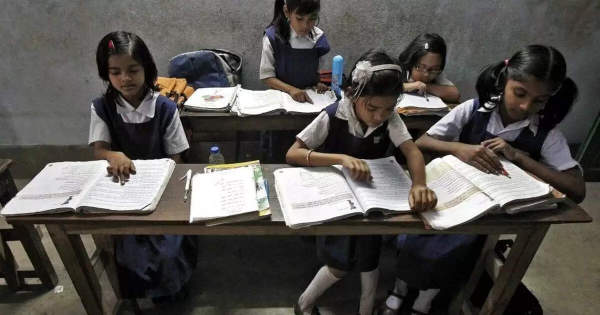
“Even with good intentions, it is challenging for a single teacher to manage a large group of students (averaging 59 in these schools) from various classes,” the report stated. “The additional responsibilities of record-keeping and the lack of basic facilities further demotivate these educators.”
Out of the 40 teachers surveyed, 35 are on contract rather than permanent positions, which often leads to inadequate training, job insecurity, and lower pay, negatively affecting teaching quality.
The survey also revealed that only six of the 40 teachers are women, which can influence the learning atmosphere, especially for female students who may feel less secure and comfortable.
Moreover, 31 of the 40 teachers are over 40 years old, indicating a shortage of recent hires.
Absenteeism among teachers was identified as a recurring problem, leaving students without adequate guidance. Even when present, teachers are frequently tied up with administrative tasks, as noted in the report.
Teachers reportedly spend around 10 hours weekly on record-keeping, which detracts from the structured education students receive.
“This situation fosters a poor learning environment, hindering students' academic performance and overall learning,” the report concluded. “Additionally, inadequate infrastructure and basic facilities in these schools pose further obstacles to education.”
Only 17.5% of the schools have functional toilets, and the quality of mid-day meals has been described as subpar, further discouraging student attendance.