Lord Vishnu and Tulsi: A Story of Devotion, Curse, and Divine Union
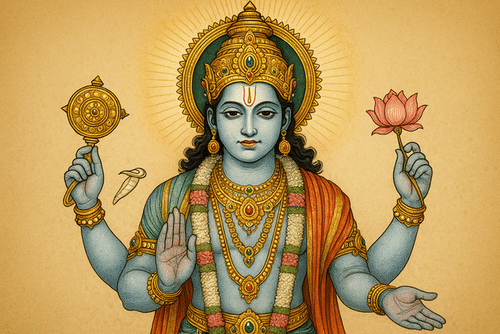
Every Hindu household treasures the Tulsi plant, often worshipped daily as a living embodiment of divinity. But behind this practice lies an ancient and profound story, the tale of Vrinda, her unwavering devotion, Lord Vishnu’s role in cosmic balance, and how their destinies intertwined to shape one of Sanatan Dharma’s most cherished rituals. The story of Tulsi and Vishnu isn’t about loss, it is about transformation, faith, and eternal union.
Vrinda: The Devotee and the Dutiful Wife
Lord Vishnu’s Dilemma and the Cosmic Balance
Vrinda’s Curse and Divine Transformation
Tulsi Vivah: The Divine Marriage
Symbolism and Spiritual LessonsThe Tulsi-Vishnu story is filled with timeless messages: Devotion Transforms into Divinity, Vrinda’s faith elevated her to an immortal sacred form. Balance Over Attachment: Vishnu’s action, though harsh, upheld dharma and cosmic order. From Pain to Purity, A curse turned into a sacred blessing for generations. Union of Energy, Tulsi and Vishnu embody the inseparable bond of nature and divinity.
An Eternal Bond Beyond TimeThe story of Tulsi and Vishnu reminds us that even curses can hold hidden blessings. Vrinda’s devotion was so powerful that she became immortal as Tulsi, and her bond with Vishnu continues to be celebrated daily in Hindu homes. What appears as betrayal in one moment transforms into eternal union in another. In every Tulsi leaf offered to Vishnu lies the message that love, faith, and devotion can transcend pain and turn into timeless divinity
Unlock insightful tips and inspiration on personal growth, productivity, and well-being. Stay motivated and updated with the latest at My Life XP
Vrinda: The Devotee and the Dutiful Wife
Lord Vishnu and Tulsi: A Story of Devotion, Curse, and Divine Union
Vrinda, also known as Tulsi, was a pious and devoted follower of Lord Vishnu. Yet fate led her to marry the asura (demon) king Jalandhara, who became invincible due to her chastity and unwavering fidelity. Her devotion to her husband made him a formidable force, challenging even the gods. This highlights the power of dharma, purity, and a woman’s vow in Hindu thought.Lord Vishnu’s Dilemma and the Cosmic Balance
Lord Vishnu and Tulsi: A Story of Devotion, Curse, and Divine Union
The gods, unable to defeat Jalandhara, sought Lord Vishnu’s help. To restore cosmic balance, Vishnu disguised himself and broke Vrinda’s chastity. Once her purity was shaken, Jalandhara lost his divine protection and was killed in battle. This act, though painful, ensured the safety of the universe, showing that even the gods sometimes make sacrifices that are misunderstood in human terms.Vrinda’s Curse and Divine Transformation
Lord Vishnu and Tulsi: A Story of Devotion, Curse, and Divine Union
Heartbroken by betrayal, Vrinda cursed Vishnu to become a Shaligram, a sacred black stone worshipped as his earthly form. She herself left her mortal body and was reborn as the Tulsi plant. Instead of being an end, this curse turned into a blessing: Vishnu and Tulsi became inseparably linked in Hindu worship. Every offering to Vishnu is incomplete without Tulsi leaves, symbolizing their eternal bond.Tulsi Vivah: The Divine Marriage
Lord Vishnu and Tulsi: A Story of Devotion, Curse, and Divine Union
This sacred story finds expression in the festival of Tulsi Vivah, celebrated in Kartik month (October–November). It marks the symbolic marriage of Tulsi and Vishnu (in the form of Shaligram), signifying the union of the feminine and masculine divine energies. The festival also marks the beginning of the auspicious wedding season in Hindu tradition.Symbolism and Spiritual LessonsThe Tulsi-Vishnu story is filled with timeless messages: Devotion Transforms into Divinity, Vrinda’s faith elevated her to an immortal sacred form. Balance Over Attachment: Vishnu’s action, though harsh, upheld dharma and cosmic order. From Pain to Purity, A curse turned into a sacred blessing for generations. Union of Energy, Tulsi and Vishnu embody the inseparable bond of nature and divinity.
An Eternal Bond Beyond TimeThe story of Tulsi and Vishnu reminds us that even curses can hold hidden blessings. Vrinda’s devotion was so powerful that she became immortal as Tulsi, and her bond with Vishnu continues to be celebrated daily in Hindu homes. What appears as betrayal in one moment transforms into eternal union in another. In every Tulsi leaf offered to Vishnu lies the message that love, faith, and devotion can transcend pain and turn into timeless divinity
Unlock insightful tips and inspiration on personal growth, productivity, and well-being. Stay motivated and updated with the latest at My Life XP
Read more