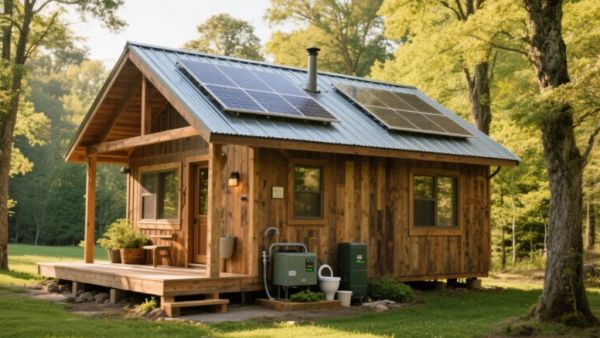
If you are overwhelmed by the hustle and bustle of modern life, it’s time to go off-grid. Living in off-grid cabins gives you a chance to relax and unwind while connecting to nature and wildlife. Due to the peace it offers, this lifestyle is quickly becoming popular in the US.
At least 180,000 families are living off the grid in the United States, and this number is only going to increase.[1] However, before you go off-grid, make the necessary preparations. This involves carrying a reliable power source like a Jackery solar generator. Keep on reading to learn more about how you can build your self-sustainable off-grid cabin.
Step 1: Planning Your Off-Grid Cabin
When building off-grid cabins, proper planning is essential. This involves multiple things, from choosing the right location to managing expenses. Let’s discuss these in detail:
Location Matters
The first and most critical thing is to find the perfect location for your off-grid cabins. Look for land that has access to natural resources, including water and sunlight.
The climate should be moderate, neither too hot nor too cold. In addition, make sure the spot you choose has year-round accessible terrain and roads. Don’t forget to check the local zoning laws and regulations to determine if the chosen location allows off-grid living or not.
Get the necessary building permits before starting the construction process. Otherwise, you’ll fall victim to legal penalties and even fines that can deprive you of the peace you expect from this lifestyle.
Budgeting Basics
Well, when planning your off-grid cabins, it’s natural to lose track of your spending. This not only empties your accounts sooner than expected but also limits your ability to get the necessities.
However, to avoid this issue, you should have a proper budget and stick to it. For instance, the average cost of an off-grid tiny home is around $28,405 and $85,985.[2]
It involves everything: the cost of buying the land, building a home or cabin, and securing utilities and resources. If you want to minimize this cost or don’t want to exceed it, here are some tips that you should follow:
- Before starting the construction of off-grid cabins, have a clear map or design that aligns with your budget. This will eliminate any unnecessary costs down the road.
- If you are well aware of some of the construction work, take on the basic tasks yourself. By doing so, you’ll reduce labor costs and utilize them to get other resources.
- Search for discounted or second-hand building materials, including salvaged windows or reclaimed wood.
- Invest in high-quality insulation materials in your off-grid cabins to ensure the temperature remains consistent throughout. This ensures that the HVAC system doesn’t undergo stress, eliminating high energy bills.
- Make use of available natural sources wherever possible. For instance, you can use timber in construction projects and natural water for irrigation and other purposes.
Step 2: Designing for Sustainability
The next thing you should focus on is to make your off-grid cabins sustainable. It’s the main goal of adopting this lifestyle, right? Here are a few tips that help you in this regard:
Designing for Sustainability
You should design your off-grid cabins for sustainability, as they reduce energy usage and overall waste. It gives you a comfortable and smarter place to live where you and your loved ones can grow and feel safe. Therefore, you must:
- Position the cabin in such a way that your solar generators capture maximum sunlight. For instance, if you are in the Northern Hemisphere, then the solar system and cabin window placement should be south-facing.
- Ensure the off-grid cabins are properly ventilated. You can install vented roofs or clerestory windows that circulate air so the overall environment inside the cabin remains comfortable.
- Don’t do large-scale land alteration, and only build a cabin that suits your needs. There’s no need to invest in huge off-grid homes where most rooms or space is going to be empty.
Material Choices
If you want to further lower your carbon footprint, you need to invest in eco-friendly building materials. They are safe and natural and improve the overall quality of indoor air. Let’s look at a few popular options that you can explore:
- Bamboo: Bamboos are fast-growing perennials or plants, as some species grow 30 to 120 cm per day.[3] They are a renewable building material that has been used for centuries. It’s primarily because they are lightweight, strong, and flexible, so you can rely on them to achieve a variety of finishes and structures.
- Recycled Steel: Recycled steel or stainless steel is also a sustainable material for building off-grid cabins. It’s fire and corrosion-resistant, and incorporating it in your cabins keeps you well protected against natural disasters.
- Reclaimed Wood: You can also try reclaimed wood, which is sourced from old oil buildings and barns. It’s renewable and durable and gives your cabin warmth and a unique character.
Size & Functionality
Make sure your off-grid cabins offer maximum functionality within their size. Separate areas for cooking, sleeping, and hygiene don’t matter how small the cabin is. This keeps everything organized and the space welcoming.
Bring in furniture that serves dual purposes, such as a bench that doubles as storage or a sofa that turns into a bed. As a general rule of thumb, you should design for needs and not wants; every space should serve a purpose!
Step 3: Powering Your Cabin with Renewable Energy
Imagine putting so much money into choosing sustainable building materials and buying a natural spot only to ruin it all by powering the cabin with a fuel generator. Seems disappointing? Well, it indeed is. Therefore, while building your self-sufficient off-grid cabins, you should have multiple renewable energy options in the loop.
Calculate Energy Needs for US Seasons
First, calculate your energy needs. Make a list of all the appliances you plan to run. This may include lighting, fans, electronics, cleaning, heating, and cooling equipment.
Sum up their wattage to get an idea of the total wattage requirements of your cabin.
It’s suggested to keep a 10% to 20% buffer just in case you plan to scale your power needs in the future. For instance, if you need a system of 1500 W, invest in a 2000 W system to avoid overloading issues.
Solar Power
Solar power is the best energy option that you should try. You can purchase a solar generator that converts sunlight into electricity, creating low-cost, off-grid homes. Wondering which solar generator is best? Here’s a suggestion:
Jackery Solar Generator 5000 Plus
The Jackery Solar Generator 5000 Plus is an ultimate powerhouse with 5- 60 kWh capacity and 7200-14400 output. With 12 output ports, it can power almost all appliances within your off-grid cabins for up to 30 days.
Whether it’s a high-end HVAC system or an electric geyser, you can trust this battery power station to do it all without any fluctuation in performance. You can either do solar charging or switch to the hybrid solar plus AC charging to have this solar generator fully charged in no time.
Portability is at the core of this product, as it weighs a mere 134.5 lbs and has advanced CTB technology. The ergonomic handle makes carrying it around the cabin a breeze.
Key Features
- 5- 60 kWh capacity and 7200-14400 output is enough to power everything in your off-grid cabins.
- 120V/240V Dual Voltage Enhances Compatibility, Supporting More Loads and More Scenarios
- 0 ms Online Mode ensures zero downtime for sensitive devices like desktop PCs, Wi-Fi routers, and NAS with automatic, high-quality power transfer.
- Jackery’s Patented ZeroDrain technology allows for 92.5% power retention after 365 days.
- Save more by prioritizing solar and off-peak charging with a designated backup power level set in the app.
Wind Turbines
Wind turbines are another renewable energy source that converts the kinetic energy of the wind into electricity. Since wind is inexhaustible and abundant, it can provide you with complete independence from the grid. You can use it to power multiple cabins in your surrounding area, creating an off-grid community. However, this entirely depends on the location. Optimal wind turbine performance heavily relies on consistent and strong wind resources, indicating that not every area is suitable.
Micro-Hydro Power
In case you have a natural water source nearby, you should utilize micro-hydro power. Typically, it’s a renewable energy technology that uses the energy of a small-scale water flow to generate electricity. It’s a decentralized and robust system, perfect for areas where there’s no access to the grid. You can even use the energy produced by this source while building an off-grid cabin. Remember that a thorough assessment of your water source’s characteristics is crucial to determine if it has the potential to generate sufficient electricity for your needs.
Step 4: Water & Waste Management
Water is becoming scarce, and to make sure it’s available for our future generation, we’ve to manage it wisely. The following are some tips on water sourcing and wastewater management to help you adopt a fully sustainable lifestyle:
Water Sourcing
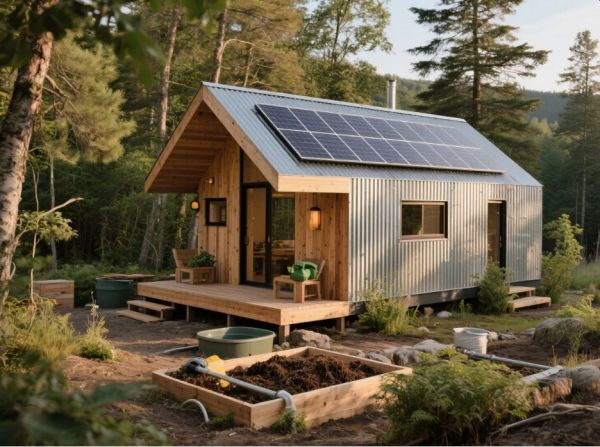
You can either source rainwater or try well drilling and natural springs. For rainwater harvesting, the rain first falls onto the roof, is guided to a gutter system, and then to a storage tank. Some filters remove debris and sediments from the water, making it clean enough for drinking and other purposes.
Once cleaned, it’s then sent to food-grade containers, and you can take out a certain amount whenever needed. However, if not this, then well drilling is an option, but it requires upfront investment.
Or if you are lucky enough to have a spring nearby, then there’s no need to get into the hassle of water sourcing at all; you’ve access to clean water all the time. Just make sure livestock and runoff don’t ruin its quality.
Waste Solutions
After putting so much effort into securing a few gallons of water, you cannot just waste it. Therefore, we suggest doing a few things, such as:
- Composting Toilets: These are dry toilets that treat human waste by a biological process called composting rather than water. Composting toilets don’t require any plumbing, and if you make ample use of sawdust, there’s no odor. However, it requires emptying after a few months.
- Greywater Systems: Greywater comes from sinks, laundry, and showers. It’s then filtered and reused for irrigation systems, flushing needs, and water needs management.
Step 5: Off-Grid Appliances & Daily Living
Off-grid cabin living doesn’t mean you’ve to compromise on your comfort. Instead, you can have all the appliances you need for your daily needs.
Must-Have Appliances
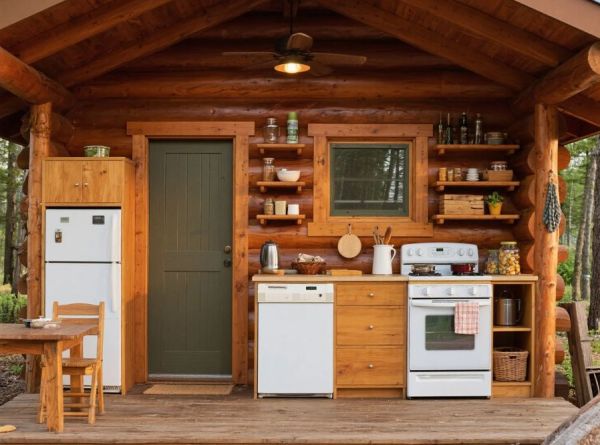
Cooktops, ovens, generators, water heaters, and AC condition are some must-have appliances for an off-grid cabin lifestyle. However, the list isn’t that short, and you also have to carry washers, refrigerators, coolers, lighting, and slow cookers.
Food and Storage
Getting food and then storing it properly is quite a hassle in off-grid living. We suggest growing your own crops. For instance, if you live in Houston, you can grow peppers, squash, zucchini, sweet potatoes, collards, and tomatoes.
You’ll have quick access to fresh food and can prepare a heavenly meal in no time. In case you don’t have access to electricity and your food is on the brink of spoiling, you can save it by the following:
- Drying
- Salting
- Pickling
- Fermentation
These techniques slow down spoilage by removing moisture and increasing acidity.
Step 6: Maintaining Your Off-Grid Lifestyle
You can maintain your off-grid lifestyle by managing energy and water wells. Some tips that aid you in this are:
Energy Conservation Strategies
Use LED lighting since it utilizes very little energy, and replace old appliances with Energy Star-rated ones. Have proper insulation in place and unplug the vampire draw appliances. If you are using Jackery solar generators, which often come with smart app options, keep an eye on your energy usage and optimize it accordingly.
Water Conservation Techniques
Spot leaks in your off-grid cabins and fix them right away to avoid wastage. Take short showers and use water-efficient appliances. In addition, install low-flow showerheads and faucets. All this conserves water, so you have it available for your needs.
Maintaining Your Systems
Maintain everything in the off-grid cabins. For instance, you should regularly clean the solar panels to ensure they work at maximum capacity. On top of this, you should regularly replace the filters of your water harvesting system so the water is safe to clean and use. This protects your investment and gives you the much-needed peace of mind.
Conclusion
Off-grid cabin lifestyle is indeed a surreal experience if you’ve everything well planned. However, don’t forget to carry a reliable solar generator like the Jackery Solar Generator 5000 Plus. It’s powerful, reliable, and comes with extensive warranties, so you don’t have to worry about anything. Get in touch with them today to explore our range of solar products and pave the way for a sustainable lifestyle!