Garba: The Dance That Celebrates Life and Divine Energy
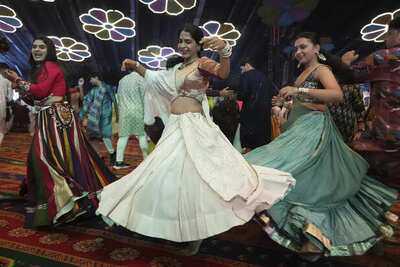
Garba is often seen as a vibrant folk dance performed during Navratri, filled with colorful attire, music, and energetic movements. Yet, beneath the festive rhythm lies a deeper spiritual and symbolic meaning. Garba is not just a social celebration, it is an ancient ritual that honors life, fertility, and the divine feminine energy of Goddess Durga.
1. The Etymology: “Garbha” – The Womb of Life

2. Circular Formation: The Cosmic Symbolism
3. Spiritual and Devotional Aspects

4. Life Lessons Hidden in Garba

5. Modern Garba: Tradition Meets Celebration
Today, Garba has evolved into a global cultural phenomenon, with large-scale events, competitions, and fusion music. While modern interpretations focus on entertainment, the spiritual essence remains, honoring Goddess Durga and celebrating life. In addition, Garba has become a medium for cultural exchange, inspiring people worldwide to explore Indian traditions, music, and devotion.
Garba – More Than a Dance
Garba is far more than rhythmic movements or festive entertainment. It is a living ritual, a homage to life, creation, and divine energy, and a practice that connects body, mind, and spirit. The dance’s circular form, devotional steps, and communal participation remind us that life is sacred, feminine energy is powerful, and devotion can be expressed through movement. Next Navratri, as the beats of the dhol resonate and dancers move in harmony, remember that each step of Garba is a celebration of life itself.Garba: The Dance of Life, Devotion, and Divine Energy
Unlock insightful tips and inspiration on personal growth, productivity, and well-being. Stay motivated and updated with the latest at My Life XP
1. The Etymology: “Garbha” – The Womb of Life
Surat, Sep 25 (ANI): Women balance a holy 'Kalash' on their head and perform "Garba" dance for Goddess Umiya during the Navratri Festival at Umiyadham, in Surat on Thursday. (ANI Photo)
The word “Garba” comes from the Sanskrit term “Garbha” (गर्भ), meaning womb or embryo. The dance is traditionally performed around a central lamp or idol, which represents the Divine Shakti, the cosmic energy responsible for creation, sustenance, and transformation. In this sense, Garba is a celebration of life itself, symbolizing the origin of all existence and the nurturing power of the Goddess.2. Circular Formation: The Cosmic Symbolism
Indians wearing traditional attire practice the Garba, a traditional dance of Gujarat state, during a rehearsal ahead of Navratri or nine night festival, in Ahmedabad, India, Monday, Sept. 15, 2025. (AP Photo/Ajit Solanki)
The circular pattern of Garba is more than choreography, it has profound cosmic significance: The circle represents the cycle of life, birth, death, and rebirth, aligning devotees with the rhythms of the universe. Dancing around the lamp or idol is symbolic of the womb of creation, where the Divine resides. The circular motion encourages unity, equality, and community, as everyone participates together, leaving ego and hierarchy behind.3. Spiritual and Devotional Aspects
People wearing traditional attire perform Garba, a traditional dance of Gujarat state, on the first night of Navratri, or nine night festival, in Ahmedabad, India, Tuesday, Sept. 23, 2025. (AP Photo/Ajit Solanki)
Garba is traditionally performed as a form of meditation in motion: Each step and clap is an offering to Goddess Durga. Repetition of movements helps focus the mind, fostering devotion, concentration, and mindfulness. The music often includes bhajans and chants, connecting dancers to sacred texts and stories of the Goddess. In essence, Garba is a ritual of prayer expressed through dance, blending physical activity with spiritual devotion.4. Life Lessons Hidden in Garba
Bhopal collector issues safety directives for Garba and Dandiya events
The Garba tradition conveys several timeless lessons: Celebrate Life: Every step honors the energy that sustains all beings. Embrace Unity: Dancing in a circle promotes inclusivity and collective harmony. Recognize Feminine Power: Garba venerates Shakti, highlighting the strength and creativity inherent in women. Spiritual Discipline: The dance teaches mindfulness, patience, and focus, echoing the values of devotion and dharma.5. Modern Garba: Tradition Meets Celebration
Today, Garba has evolved into a global cultural phenomenon, with large-scale events, competitions, and fusion music. While modern interpretations focus on entertainment, the spiritual essence remains, honoring Goddess Durga and celebrating life. In addition, Garba has become a medium for cultural exchange, inspiring people worldwide to explore Indian traditions, music, and devotion.
Garba – More Than a Dance
Garba is far more than rhythmic movements or festive entertainment. It is a living ritual, a homage to life, creation, and divine energy, and a practice that connects body, mind, and spirit. The dance’s circular form, devotional steps, and communal participation remind us that life is sacred, feminine energy is powerful, and devotion can be expressed through movement. Next Navratri, as the beats of the dhol resonate and dancers move in harmony, remember that each step of Garba is a celebration of life itself.Garba: The Dance of Life, Devotion, and Divine Energy
Unlock insightful tips and inspiration on personal growth, productivity, and well-being. Stay motivated and updated with the latest at My Life XP
Read more