 Concerns Over Neglect in Northern Assam
Tezpur, Oct 7: Inhabitants of the northern regions, stretching from Orang-Mazbat in the Bodoland Territorial Region (BTR) to Gohpur, encompassing areas like Dhekiajuli, Rangapara, Sootea, Nadwar, Gohpur, and Behali in the former Sonitpur district, have voiced their frustration regarding the government's indifference towards long-standing issues affecting their lives.
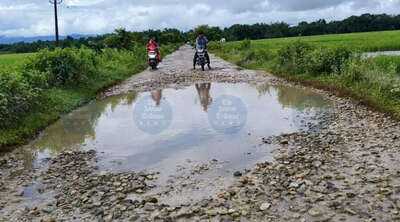
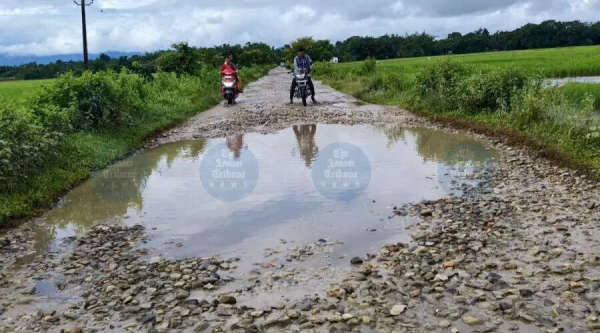
The community faces numerous challenges, including poor road infrastructure, lack of electricity, inadequate drinking water supply, insufficient healthcare services, unresolved land patta issues, and the inclusion of several villages under the BTR's jurisdiction.
Over 3,000 Bodo villages in this area have been deprived of basic necessities for over five decades. During a recent visit, local leaders such as Anjan Daimary and Enosh Mochahary, president of the All Bodo Students’ Union (ABSU), expressed that despite various government initiatives aimed at rural development, significant progress remains elusive due to the negligence of both authorities and elected representatives.
Highlighting the dire situation, Daimary pointed to Urohiloga village, noting the absence of a single well-maintained road connecting it to other regions. He lamented that even in the 21st century, essential services like proper electrification, clean drinking water as promised by the Jal Jeevan Mission (JJM), hospitals, and educational institutions remain unattainable for the residents.
Daimary further mentioned that there are 102 Bodo-medium schools in the area, comprising 74 lower primary, 17 upper primary, and 11 high schools, many of which are still classified as 'venture' schools. Due to insufficient teacher appointments, some of these schools have already shut down, and 69 Education Guarantee Scheme (EGS) centers in the Dhekiajuli and Nadwar blocks have yet to be upgraded due to bureaucratic delays. He criticized the poor infrastructure of Bodo-medium schools, stating that the conditions are unimaginable for students.
"When we compare our schools to those in more developed rural areas, our students feel as though they are dreaming," he remarked.
Residents believe that the government's actions suggest an intention to gradually phase out Bodo-medium schools, potentially violating the Right to Education Act of 2009.
Additionally, the community continues to struggle with land patta issues. Despite repeated assurances from various governments to resolve these problems, no tangible progress has been made.
"The Panchayati Raj system has yet to be established in our area, which has hindered access to essential services like transportation, safe drinking water, electricity, and healthcare under various government development schemes," a local villager stated.
It is important to note that according to the BTR Accord of 2020, 60 newly notified villages, including 18 from Sonitpur district, were incorporated into the BTR. However, administrative responsibilities for these villages will soon shift to Udalguri district.
Residents of these newly included villages believe that if the provisions of the BTR Accord are effectively implemented, with a focus on integrating the remaining Bodo villages into the BTR by the newly elected government, they will finally experience development comparable to other more prosperous communities in the region.