Sattu or Besan: Which is better?
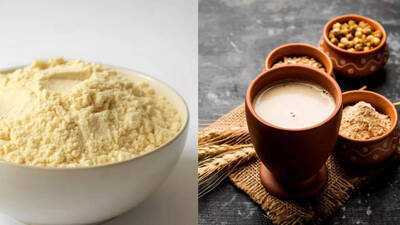
Sattu and besan are both popular Indian flours derived from chickpeas but differ in preparation, nutritional composition, and health benefits . Choosing between them depends on individual health goals and dietary preferences, as each has unique advantages.Sattu is made by dry roasting whole chickpeas and then grinding them, whereas besan (gram flour) is made by grinding raw chickpeas without roasting. Both are staples in Indian kitchens and widely used in various dishes, but their health impacts vary because of distinct nutrient profiles and digestion properties.
Nutritional Differences
Per 100 grams, besan contains around 350 calories, with a higher protein content of 23.3 grams, lower fat at 3.3 grams, and more fiber at 6.7 grams. It also provides around 4.8 mg iron and 17 mg sodium. Sattu has slightly higher calories at 406 per 100 grams but contains 20.6 grams protein, 7.2 grams fat, only 1.3 grams fiber, and higher carbohydrates at 65.2 grams. Sattu has a richer mineral content including calcium, iron, magnesium, and potassium.
Digestion and Satiety
Since sattu is made from roasted chickpeas, it is easier to digest and has fewer antinutritional factors. Its high carbohydrate and fiber content provide sustained energy release and promote a feeling of fullness, making it excellent for maintaining energy levels and aiding weight management. Besan, being raw, has a finer texture and is versatile in cooking but may be slightly harder for some people to digest.[3][4]
Health Benefits
Sattu is known for its cooling properties and is often consumed as a refreshing drink in summer, helping in hydration and electrolyte balance. It supports digestive health due to its fiber and mineral content. Besan is protein-rich, supports muscle maintenance, and is suitable for various cooking methods, including fermentation, which enhances digestibility. Both contribute iron, beneficial for reducing anemia risk.[2][3]
Culinary Use and Versatility
Besan is extensively used for making snacks like pakoras, chillas, and sweets, favored for its binding and thickening abilities. Sattu is commonly used for thirst-quenching drinks, parathas, and traditional dishes like litti chokecha. Its roasted flavor gives it a unique taste profile.[4][3]
In a nutshell, it can be said that both sattu and besan offer valuable nutrients and health benefits. Sattu is preferable for those seeking easier digestion, hydration, and sustained energy. Besan is better suited for higher protein intake and diverse culinary applications. Alternating between the two can provide a balanced intake of nutrients and variety in diet, making both beneficial additions to a healthy lifestyle.
Nutritional Differences
Per 100 grams, besan contains around 350 calories, with a higher protein content of 23.3 grams, lower fat at 3.3 grams, and more fiber at 6.7 grams. It also provides around 4.8 mg iron and 17 mg sodium. Sattu has slightly higher calories at 406 per 100 grams but contains 20.6 grams protein, 7.2 grams fat, only 1.3 grams fiber, and higher carbohydrates at 65.2 grams. Sattu has a richer mineral content including calcium, iron, magnesium, and potassium.
Digestion and Satiety
Since sattu is made from roasted chickpeas, it is easier to digest and has fewer antinutritional factors. Its high carbohydrate and fiber content provide sustained energy release and promote a feeling of fullness, making it excellent for maintaining energy levels and aiding weight management. Besan, being raw, has a finer texture and is versatile in cooking but may be slightly harder for some people to digest.[3][4]
Health Benefits
Sattu is known for its cooling properties and is often consumed as a refreshing drink in summer, helping in hydration and electrolyte balance. It supports digestive health due to its fiber and mineral content. Besan is protein-rich, supports muscle maintenance, and is suitable for various cooking methods, including fermentation, which enhances digestibility. Both contribute iron, beneficial for reducing anemia risk.[2][3]
Culinary Use and Versatility
Besan is extensively used for making snacks like pakoras, chillas, and sweets, favored for its binding and thickening abilities. Sattu is commonly used for thirst-quenching drinks, parathas, and traditional dishes like litti chokecha. Its roasted flavor gives it a unique taste profile.[4][3]
In a nutshell, it can be said that both sattu and besan offer valuable nutrients and health benefits. Sattu is preferable for those seeking easier digestion, hydration, and sustained energy. Besan is better suited for higher protein intake and diverse culinary applications. Alternating between the two can provide a balanced intake of nutrients and variety in diet, making both beneficial additions to a healthy lifestyle.
Read more