Judicious exploitation of mineral resources – a big step towards a self-reliant economy
Balancing forest conservation and mining, expansion of greenery with development
State’s economy shining with minerals – historical increase of 34 times in mineral revenue
Chhattisgarh News: The name Chhattisgarh is no longer synonymous only with greenery and culture, but has also made its mark as the mineral capital of India. A major part of the country’s total mineral reserves is hidden in the soil of Chhattisgarh. This is the reason why the contribution of minerals in the state’s economy is continuously increasing and the share of mineral sector in the state’s gross domestic product (GSDP) has reached about 10 percent. At the time of formation of the state, the mineral revenue was Rs 429 crore, which has now increased to Rs 14 thousand 592 crore. The state’s mineral revenue has increased 34 times in 25 years. This achievement of Chhattisgarh state in maintaining forest and environmental balance is especially noteworthy.
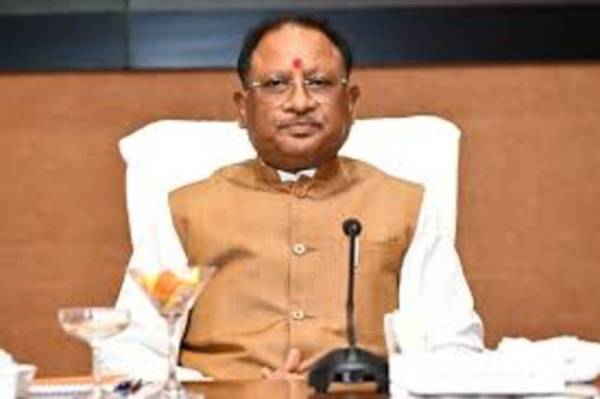
It is also noteworthy here that from 1980 till now, under the Forest Conservation Act, only 28 thousand 700 hectares of land has been given for mining in the state of Chhattisgarh, which is 0.47 percent of the forest area of the state of 59.82 lakh hectares and 0.21 percent of the total land area of the state of 135 lakh hectares. Due to making it mandatory to plant 5 to 10 times more trees along with harvesting in mining areas, the forest area of the state has increased by 68 thousand 362 hectares, which is the highest in the country according to the India State of Forest Report. Mineral revenue is not only providing economic support to the state, but is also opening up new employment opportunities for thousands of youth. Under the leadership of Chief Minister Shri Vishnu Dev Sai, the Chhattisgarh government is creating a new definition of “development through minerals” by linking the exploitation of mineral wealth with environmental balance and public interest.
Coal, one of the major minerals of Chhattisgarh, is the biggest source of energy. Chhattisgarh is the second largest coal producing state in the country. Coal storage in the state is 74,192 million tonnes, which is about 20.53 percent of the country’s coal reserves. Chhattisgarh state has 20.73 percent share in coal production in the country. Chhattisgarh ranks second among the coal producing states of the country. The coal of the state is being used in thermal power plants, cement, steel and coal based medium and small industries. Chhattisgarh’s contribution in self-reliance of energy sector is important for the entire country. Iron ore is the backbone of the country’s steel industry, which is present in abundance in Chhattisgarh. The mountain ranges extending from Kabirdham to Dantewada Bailadila via Dallirajhara contain iron ore reserves of 4,592 million tonnes, which is 19.09 percent of the national reserves. Chhattisgarh’s contribution in national production is 16.64 percent. NMDC’s Bailadila mines (Dantewada) and Dalli-Rajhara mines (Balod) are the lifeline of the country’s steel industries. From here Bhilai Steel Plant and industries across the country get high quality iron ore. Chhattisgarh ranks second in the country in iron ore production.
Chhattisgarh has 992 million tonnes of bauxite reserves, which is 20 percent of the country. Chhattisgarh’s contribution in national production is 4.3 percent. Companies like Hindalco, Vedanta and CMDC are active in Surguja, Balrampur and Kabirdham districts. Aluminum produced from bauxite is important for the energy, construction and defense industries. Limestone is the backbone of the cement industry. The state has 13,211 million tonnes of limestone reserves, which is 5.8 percent of the country’s total reserves. Chhattisgarh’s contribution in national production is 11 percent. Plants like UltraTech, ACC, Ambuja, Shree Cement, Grasim are operational in Balodabazar, Raipur, Janjgir-Champa and Raigarh districts. Balodabazar is now called ‘Cement Hub’. 100 percent tin production of the country takes place in Chhattisgarh. A reserve of 30 million tonnes of tin ore of strategic importance is available here. This mineral found in Dantewada and Sukma is very important for electronics and defense industry. The state government has implemented the provision of purchasing it through cooperative societies of Scheduled Tribes. The state has 992 million tonnes of dolomite reserves, which is 20 percent of the national reserves. Mainly found in Raipur, Durg, Bemetara, Bilaspur, Janjgir-Champa and Raigarh districts. This mineral is useful as a flux material in the steel industry. There are proven diamond reserves in Behradih and Payalikhand areas of Gariaband district. Apart from 2780 kg gold reserves in Sonakhan area of Balodabazar district, gold and diamond mineral possibilities have also been found in Jashpur, Mahasamund and Kanker districts.
Minor minerals also play a big role in Chhattisgarh. In the state, 37 types of minor minerals like sand, mud, building stone, ordinary clay, low grade limestone, dolomite and granite are excavated in almost every district. Sand and soil are being widely used in road, building and bridge construction. The state receives a major share of local revenue, employment and panchayat funds from minor minerals. District Panchayats and municipal bodies get revenue of hundreds of crores of rupees every year from these minerals, which gives impetus to rural development works. Along with mineral development, the state government has paid special attention to environmental protection and rehabilitation of mining affected areas. Schemes like education, health, drinking water and roads are being operated through DMF. The example of balance between mineral development and environmental protection set by Chhattisgarh has today become a sustainable growth model for the entire country. Here development and greenery are not opposites but complementary. Under the leadership of Chief Minister Vishnu Dev Sai, Chhattisgarh has proved that if there is vision in policy and sensitivity in implementation, then mineral wealth can be reflected not only in the depth of the land but also in the prosperity of people’s lives.