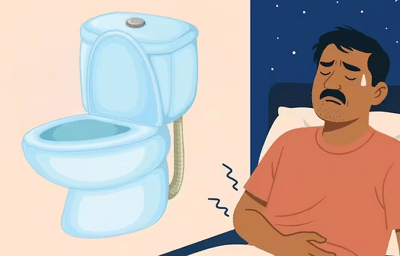
Poop Timing: There's a time for everything: when a person eats, drinks, sleeps, and freshens up. If your poop timing changes, it can affect your health. Let us explain how.

Potty affects health
Health Effects of Poop Timing: People often don't pay attention to whether they poop in the morning or evening, but the timing of poop reveals a lot about the state of their stomach, intestines, and metabolism. Our digestive system operates on a 24-hour circadian rhythm, just like sleep, hunger, hormones, and the body clock. This is why most people relieve themselves shortly after waking up in the morning, as the colon is most active at that time.
But if someone goes to the toilet every evening or at irregular times, it's often a sign that their body clock, stress levels, or eating habits have changed. Paying attention to timing can help you quickly understand many small but important aspects of your metabolic health. Let's explain what this reveals.
Why does the body like to potty in the morning?
It's worth noting that the movement of the stomach and colon doesn't remain consistent throughout the day. Their activity peaks after waking up in the morning. Research suggests that colon motility has its own circadian rhythm, accelerating during the day and slowing down at night. Several studies in mice have found that deleting specific clock genes, such as Per1 and Per2, disrupts bowel movements completely. Furthermore, eating a meal upon waking activates the gastrocolic reflex, which signals the colon to move its contents forward. For these reasons, morning bowel movements are a sign that your body and gut clock are working in sync.
What does it mean to have to poop in the evening?
If a person poops only in the evening every day, it could mean their body clock has shifted. This happens because colon movement slows down significantly at night. If digestive activity picks up in the evening, it could be due to factors like late-night eating, shift work, or irregular sleep. Eating is also a major trigger for the body's internal clock, so eating late can disrupt gut rhythms. This means that evening pooping may not just be a sign of delayed digestion, but also a sign of a disturbed metabolic rhythm.
The connection between potty timing and metabolism
Both the intestine and metabolism are linked to the body clock. Disruptions in sleep, eating, or routine can not only alter colon function but also affect functions like sugar control and fat metabolism. Therefore, regular morning bowel movements often indicate a synchronized metabolism, while evening or irregular timing may indicate a rhythm shift.
When is this timing a cause for concern?
If your bowel movements suddenly change, accompanied by pain, bloody bowel movements, weight loss, or persistent bloating, it shouldn't be taken lightly. Disturbances in the circadian rhythm are also believed to be linked to conditions like IBS or functional constipation. Keeping track of your bowel movements over a few days can help identify the problem and prompt medical advice.