Mumbai: Every year on November 19, the world observes World Toilet Day, advocating dignity, hygiene, and the right to a clean toilet. But in Dharavi, Asia’s largest slum, that message feels like a cruel joke. Here, queues for toilets never end, the stench never lifts, and what the rest of the world calls a “basic right” becomes a daily battle for time, safety, and privacy.
According to Swachh Bharat Mission (SBM) norms, urban areas should have one toilet seat per 35 men and 25 women. Dharavi’s reality is far from this benchmark. A recent report by Praja Foundation, which studies Mumbai’s slum conditions, reveals that 86 men and 81 women share a single toilet seat every day. Public toilets remain shut between midnight and 5 a.m., forcing women and adolescent girls to skip meals or avoid drinking water in the evenings to reduce nighttime visits.
Mumbai: Differently-Abled Passengers To Receive 25% Fare Concession On Metro Line 3 From Nov 23Nearly 70% of Dharavi’s population depends on community toilets, most of which are unhygienic, overcrowded, and unchanged for decades. With over 10 lakh residents crammed into tiny hutments—often one-sixth the size of a standard one-room kitchen—private toilets are a distant dream.
The situation, however, promises to change. The Dharavi Redevelopment Project aims to provide every resident with a new home equipped with two private toilets, 24x7 water, and electricity—a life of dignity long overdue. For women, this means safety and privacy. A UNICEF study highlights that 93% of women feel safer with private toilets, and an open-defecation-free village can save families up to ₹50,000 annually in medical costs, time, and property value.
Mumbai: MMR Public Survey Highlights Jobs, Housing, & Transport As Top Priorities For 2047 VisionSince its launch in 2014, Prime Minister Narendra Modi’s Swachh Bharat Mission has built 11 crore individual toilets and 2.33 lakh community toilets across India, reducing open defecation to 11% of the population, according to a joint WHO-UNICEF monitoring report—the largest global reduction in a decade.
For Dharavi, the redevelopment is more than infrastructure—it’s a promise of dignity. Until then, World Toilet Day remains a stark reminder of the gap between global aspirations and local realities.
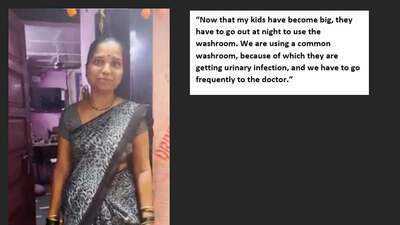
Testimonials From Dharavi ResidentsChandtara
To get details on exclusive and budget-friendly property deals in Mumbai & surrounding regions, do visit: https://budgetproperties.in/