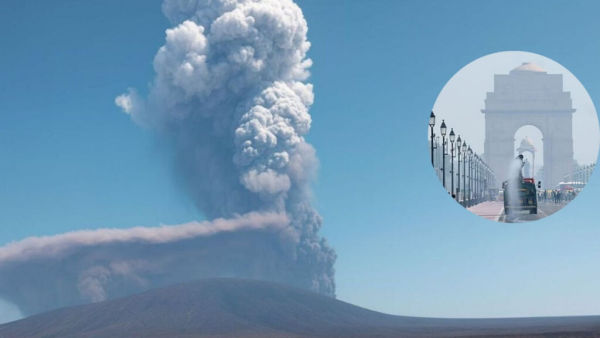
New Delhi: The ash emanating from the Haile Gubbi volcano, which became active after thousands of years in northern Ethiopia, has now reached India. In the last 24 hours, the ash spread over the Red Sea and the sky over the Middle East and moved towards northwestern India. It reached Delhi around 11 pm late in the night, where its effect is visible by creating hazy cloud-like conditions in the sky. Sulfur dioxide and small stone particles have also spread along with ash in many states including Rajasthan, Delhi, Gujarat and Punjab.
Impact on Delhi’s air quality
Indian Meteorological Department (IMD) Director General M Mohapatra said that the impact of volcanic ash on the pollution level of Delhi and surrounding areas is likely to be limited. He says that due to the ash being at a higher altitude, its direct impact on the ground will be less. He said that this can mainly affect aircraft operations. However, the sky will appear hazy and cloudy and the temperature may rise slightly as the ash blocks the sun’s rays.
Ash speed and height
Meteorologist Aishwarya Tiwari said that the ash is moving towards North India at a speed of 100-120 kilometers per hour and its spread ranges from a height of 15,000 to 45,000 feet. Ash mainly consists of volcanic ash, sulfur dioxide and small stone or glass particles, which make the sky dark and hazy. The air quality was affected in Delhi and surrounding cities and the AQI level reached around 400, which falls in the very poor category.
Impact on aircraft operations
Officials say that due to the cloud of ash, the operation of aircraft in the Indian airspace has started being affected. Considering its direction, airlines have started canceling flights. IndiGo grounded six flights, which included flights to and from Mumbai and South India.
Caution and future forecast
According to IMD and Met Sky X experts, the ash will remain in the sky for a few hours and will move slowly. Citizens do not need to take special precautions at present, but air traffic and aircraft operations may be affected. The Meteorological Department is continuously monitoring this and will give updates if necessary.