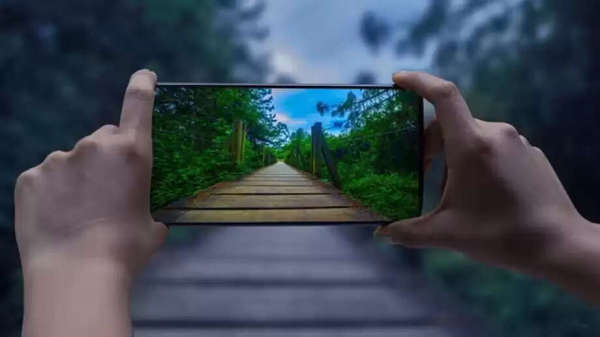
Camera quality in today's smartphones depends not only on megapixels but also on stabilization technology. Companies are offering technologies like OIS and EIS to ensure shake-free photos and videos. Many people engage in mobile photography extensively, but don't understand the true difference between these two technologies. If you're interested in knowing which technology is best for you, here's the full information.
What is OIS, and how does it work?
OIS, or Optical Image Stabilization, is a hardware-based technology in which the camera lens or sensor automatically moves to balance out shake. OIS controls movement in real time, even when the phone is shaken or shot in motion. This benefits images that are clearer and sharper, even in low light. OIS also provides a natural and smooth output in video recording, as it doesn't reduce quality during processing.
What is EIS, and how does it work?
EIS, or Electronic Image Stabilization, is entirely software-based. The system digitally stabilizes the frame by cropping the footage. While this technology helps make videos appear shake-free, quality can sometimes suffer. EIS isn't as accurate, especially in fast-paced motion or low-light situations. However, the advantage of EIS is that it can be integrated into phones at a low cost, making it common in budget smartphones.
The main difference between OIS and EIS is that OIS is a hardware technology, while EIS is software-based. OIS is more beneficial in low light because it stabilizes the original frame. EIS, on the other hand, works with digital adjustments, so image quality may be slightly reduced due to frame cropping and processing. Both technologies are useful for video stabilization, but OIS produces a more natural output, while EIS sometimes produces a jelly effect during fast movement.
Which technology is better for whom?
If you do a lot of low-light photography, night mode shooting, travel videos, or recording while walking, OIS is a better and more reliable technology for you. However, if you use a budget phone and only create social media reels or casual videos, EIS can also work well. Many brands are now offering hybrid stabilization, combining both technologies, to give users a smoother and more professional output.
Disclaimer: This content has been sourced and edited from TV9. While we have made modifications for clarity and presentation, the original content belongs to its respective authors and website. We do not claim ownership of the content.