Which country is called the Rainbow Nation?
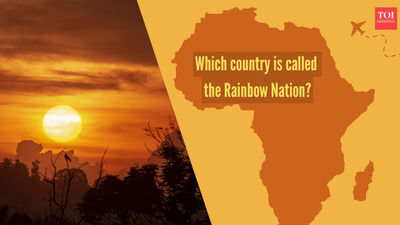
Any guesses? It’s South Africa which is widely known as the Rainbow Nation , a term coined by Archbishop Desmond Tutu to describe the country’s identity after the end of apartheid . The phrase emerged following South Africa’s first democratic election in 1994, which marked an important step in the building of the nation. Tutu used the expression to capture the spirit of unity, and diversity.
The idea gained even more prominence when President Nelson Mandela elaborated on it during his first month in office. He described South Africans as being as deeply connected to their land as the jacaranda trees of Pretoria and the mimosa trees of the bushveld, calling the country a rainbow nation at peace with itself and the world.
During a televised appearance, Tutu used the term in reference to the “Rainbow People of God.” As a cleric, this metaphor drew upon the Old Testament story of Noah’s Flood, where the rainbow represents peace. Within South African indigenous cultures, the rainbow is associated with hope and a bright future. The rainbow also has a secondary, more political metaphor. Importantly, the colours of the rainbow were never meant to represent specific groups or ethnicities. Whether one refers to Isaac Newton’s seven-colour spectrum or the five-colour spectrum of Nguni (Xhosa and Zulu) cosmology, the metaphor focuses on unity rather than literal colour associations. Interestingly, the imagery aligns naturally—though not intentionally—with the six-coloured South African flag, which visually conveys diversity without assigning meaning to each colour.
Read more:
However, the idea of the Rainbow Nation has not been without criticism. Some South African political thinkers argue that rainbowism can risk glossing over real and ongoing challenges, such as inequalities, crime, and the legacy of racism. Poet, academic, and politician Jeremy Cronin warned that sinking into a comfortable sense of “smug rainbowism” could undermine the true processes of transformation, reconciliation, and nation-building that the country still needs. This criticism suggests that while the metaphor is powerful, it must be balanced with clear-eyed engagement with South Africa’s contemporary realities.
Scholars have also noted that rainbowism reflected a unique post-apartheid socio-political moment at the end of the 20th century. Over time, however, this idea has been overtaken by more conventional forms of post-colonial analysis in South Africa, which frame national identity and political challenges in different ways.
Read more:
Beyond symbolism, South Africa’s diversity is also reflected in its day-to-day culture. The country recognises 11 official languages, making its linguistic landscape one of the richest in the world. Languages such as English, Afrikaans, Zulu, and Xhosa sit alongside many others spoken across different regions and communities, reinforcing the idea of unity through diversity.
Sports also play an influential role in shaping national identity. Rugby, soccer, golf, and cricket stand out as some of the country’s most celebrated sports. A major milestone came in 2010, when South Africa became the first African nation to host the FIFA World Cup, showcasing its cultural and sporting spirit on the global stage.
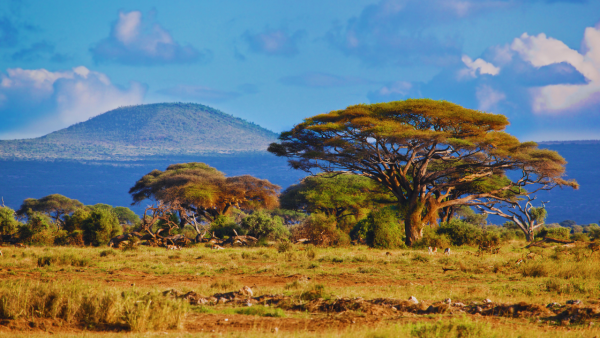
South Africa’s natural and cultural heritage further enhances its identity as a land of variety. Places like Robben Island, Table Mountain, and the Cradle of Humankind highlight its blend of human history and breathtaking landscapes.
The idea gained even more prominence when President Nelson Mandela elaborated on it during his first month in office. He described South Africans as being as deeply connected to their land as the jacaranda trees of Pretoria and the mimosa trees of the bushveld, calling the country a rainbow nation at peace with itself and the world.
During a televised appearance, Tutu used the term in reference to the “Rainbow People of God.” As a cleric, this metaphor drew upon the Old Testament story of Noah’s Flood, where the rainbow represents peace. Within South African indigenous cultures, the rainbow is associated with hope and a bright future. The rainbow also has a secondary, more political metaphor. Importantly, the colours of the rainbow were never meant to represent specific groups or ethnicities. Whether one refers to Isaac Newton’s seven-colour spectrum or the five-colour spectrum of Nguni (Xhosa and Zulu) cosmology, the metaphor focuses on unity rather than literal colour associations. Interestingly, the imagery aligns naturally—though not intentionally—with the six-coloured South African flag, which visually conveys diversity without assigning meaning to each colour.
Read more:
However, the idea of the Rainbow Nation has not been without criticism. Some South African political thinkers argue that rainbowism can risk glossing over real and ongoing challenges, such as inequalities, crime, and the legacy of racism. Poet, academic, and politician Jeremy Cronin warned that sinking into a comfortable sense of “smug rainbowism” could undermine the true processes of transformation, reconciliation, and nation-building that the country still needs. This criticism suggests that while the metaphor is powerful, it must be balanced with clear-eyed engagement with South Africa’s contemporary realities.
Scholars have also noted that rainbowism reflected a unique post-apartheid socio-political moment at the end of the 20th century. Over time, however, this idea has been overtaken by more conventional forms of post-colonial analysis in South Africa, which frame national identity and political challenges in different ways.
Read more:
Beyond symbolism, South Africa’s diversity is also reflected in its day-to-day culture. The country recognises 11 official languages, making its linguistic landscape one of the richest in the world. Languages such as English, Afrikaans, Zulu, and Xhosa sit alongside many others spoken across different regions and communities, reinforcing the idea of unity through diversity.
Sports also play an influential role in shaping national identity. Rugby, soccer, golf, and cricket stand out as some of the country’s most celebrated sports. A major milestone came in 2010, when South Africa became the first African nation to host the FIFA World Cup, showcasing its cultural and sporting spirit on the global stage.
South Africa’s natural and cultural heritage further enhances its identity as a land of variety. Places like Robben Island, Table Mountain, and the Cradle of Humankind highlight its blend of human history and breathtaking landscapes.
Read more