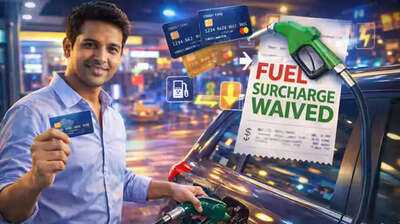
If you use your credit card to fill up your car or bike with petrol or diesel, you've probably noticed an extra charge called a 'fuel surcharge' on your bill. Many people get annoyed by this, wondering why they're being charged extra when petrol prices are already so high.
But did you know that credit card companies quietly refund this money to your account? This is called a 'fuel surcharge waiver'. Many agents even highlight this as a special feature when selling cards. Let's understand how this entire system works and how you can benefit from it.
Why is a fuel surcharge levied?
When you pay with a card, the petrol pump owner has to pay a transaction fee to the bank and the card network (like Visa or Mastercard). Because the profit margin on petrol and diesel is very low, pump owners pass this fee on to the customer instead of bearing the cost themselves. This is why a surcharge of 0.5% to 2.5% is added separately to the bill.
How does the waiver work?
Do these rules apply to debit cards and cash payments?
Debit cards: Yes, a fuel surcharge can also be levied on debit card payments. Some banks offer waivers on debit cards as well, but the rules may be different and stricter than those for credit cards.
Cash payments: No, if you pay for petrol with cash, there is no surcharge because no bank or network fees are involved. Also read - Getting an EMI on your credit card? Pay close attention to these charges; banks often don't disclose them clearly, and people forget to ask!
Some important conditions for getting a waiver
Banks have certain conditions for giving this waiver, which you need to know:
Transaction limit: This waiver is often available only when you fill up petrol worth at least Rs. 400 and a maximum of Rs. 4,000 or Rs. 5,000.
Monthly limit: There is a limit (such as Rs. 100 or Rs. 250) on the maximum amount you can get back in a month.
Specific petrol pumps: Some cards offer this facility only at select oil company pumps (such as HPCL or BPCL).
Conclusion
Disclaimer: This content has been sourced and edited from Zee Business. While we have made modifications for clarity and presentation, the original content belongs to its respective authors and website. We do not claim ownership of the content.