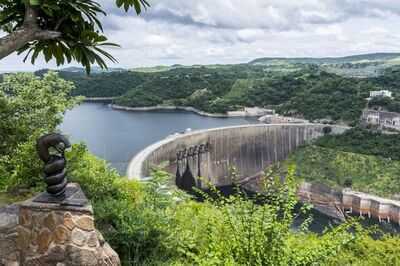
A vast artificial lake stretching for hundreds of miles across southern Africa holds the title as the largest man-made reservoir on Earth - and it took five years for the waters to finally reach their peak. The enormous lake, known as Lake Kariba, sits on the border between Zambia and Zimbabwe, after engineers dammed the mighty Zambezi River in one of the 20th century's most ambitious engineering projects.
The reservoir was created by the construction of the huge Kariba Dam in the 1950s, a project that was designed to provide electricity for the region's booming mining industry and growing cities. Construction began in 1955 and was completed four years later, with the massive concrete arch dam rising 420 feet (128m) high and stretching almost 1,900 feet (580m) across the gorge. Once the dam was finished, the Zambezi began to flood the surrounding valley, slowly creating the enormous reservoir that stands today.
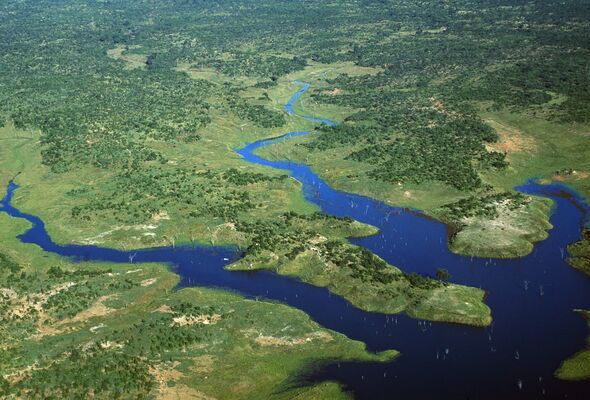
However, the real spectacle came after the dam gates were closed. The filling process began in 1958 and continued until 1963, taking about five years for the lake to reach its full level. By the time it was complete, Lake Kariba had become a truly colossal body of water. At about 174 miles (280km) long, 25 miles (40km) wide and a maximum depth of 318 feet (96m), it is the largest man-made lake in the world by volume.
It has a surface area of roughly 2,124 square miles (5,500 km²) and a volume of 43 cubic miles of water (180 km³).
At the time, the dam was one of the most expensive infrastructure projects ever built in Africa. The scheme cost about £78million in the 1950s - equivalent to hundreds of millions of pounds today - although later additions to the hydropower system eventually pushed the overall cost far higher.
The dam was designed by French engineer André Coyne and constructed by thousands of workers who laboured around the clock in harsh conditions. Around 86 people died during its construction, caused by dangerous working conditions, accidents and devastating floods in 1957 and 1958, which were attributed by local Tonga belief to the anger of the river god, Nyaminyami.
*** Ensure our latest news headlines always appear at the top of your Google Search by making us a Preferred Source. Click here to activate or add us as Preferred Source in your Google search settings. ***
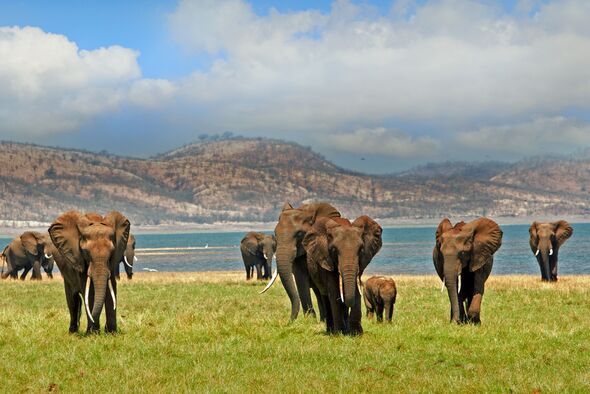
However, the creation of Lake Kariba also came at a huge human and environmental cost. When the waters rose, tens of thousands of Tonga people were forced to relocate from the Zambezi Valley as their homes were submerged beneath the new reservoir. Wildlife also became trapped on shrinking islands, leading to a famous rescue mission known as "Operation Noah" (1958-64), which relocated thousands of animals, including elephants, lions and antelope.
Today, the vast lake remains a crucial power source, supplying electricity to both Zambia and Zimbabwe through hydroelectric stations on either side of the dam. The dam harnesses the power of the Zambezi River, with water flowing through huge underground turbines to generate electricity. Each country operates its own power station built into the rock on either side of the dam wall. The Kariba North Bank Power Station in Zambia has an installed capacity of about 1,080 megawatts, while the Kariba South Power Station in Zimbabwe can generate around 1,050 megawatts following an expansion completed in 2018.
Combined, the two stations can produce roughly 2,000 megawatts of electricity - enough to power millions of homes and businesses across the region. In total, the dam typically generates around 6,400 gigawatt-hours of electricity each year, making it one of the most important energy sources in southern Africa for over six decades.