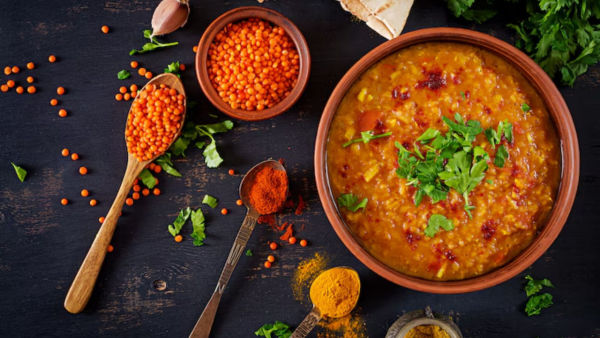
Masoor dal: Vegetarian food is usually used with lentils, rice, vegetables and chapati. But what should happen when a lentil is considered as a non -vegetarian? It may seem strange to hear, but in Hinduism, red lentils are placed in the category of tamasic food. Those who believe in saints and Vaishnava tradition completely abandon it.
Why is it that a common pulses are considered as tamasic and non -vegetarians? Religious beliefs, mythology and some reasons to dietary science are given behind this. Let us know in detail why such beliefs are prevalent about red lentils.
Why is tamasic food red lentil dal?
In Hinduism, tamasic foods are those that have negative effects on the body and mind. These include garlic, onion and more chili-spicy foods. The red lentil dal is also placed in this category because it is believed that it promotes lethargy, anger and negative energy. This is why it is seen equivalent to non -vegetarian food.
Kamadhenu cow and red lentils relationship
According to a popular belief, the relationship of red lentils is connected to the blood of Divine Cow Kamadhenu. According to mythology, when King Sahastrabahu Arjuna tried to forcefully take Kamadhenu from the ashram of Rishi Jamadagni, Kamadhenu was attacked with arrows during the struggle. Wherever his blood fell, a red lentil plant grown there. That is why the Brahmins and followers of the Vaishnav tradition consider it as a non -vegetarian and do not consume it.
Origin of Swarbhanu and Red Masoor
According to another legend, when Lord Vishnu cut the head of an asura named Swarbhanu, his body divided into two parts – Rahu and torso became Ketu. It is believed that red lentils originated from the blood that shed from the severed head. That is why it was placed in the category of inauspicious and tamasic food.
Similar to non -vegetarian due to high protein?
Red lentil lentils are considered high protein -rich. Nutritionists say that its protein content is similar to meat, causing it to increase the energy and heat of the body. Its use can increase mental stimulation and anger. Sadhus and saints, who are absorbed in restraint and cultivation, do not eat it.
Tantra-mantra and red lentils
In Hinduism, red lentils are used in many tantra-mantra rituals. In particular, it is offered in worship to please Goddess Kali. This is the reason that it is also associated with esoteric and mysterious energy.
Do people still consider it a non -vegetarian?
In modern times, most people consider red lentils to be just a nutritious food, but the impact of religious and traditional beliefs is still seen in many places. In particular, people who follow the Vaishnava tradition avoid this pulses.
Disclaimer: This story is based on religious beliefs, JBT does not confirm it.