 A Hub Turned Hazard
The bus stand in Dharampur, located in the Mandi district of Himachal Pradesh, was intended to serve as a center for transportation and commerce. However, it has instead become a representation of ineffective planning and obstinate political decisions.
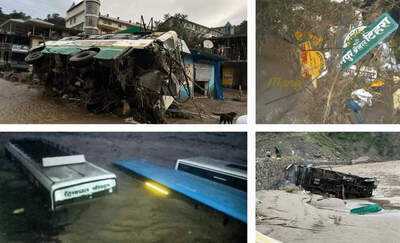
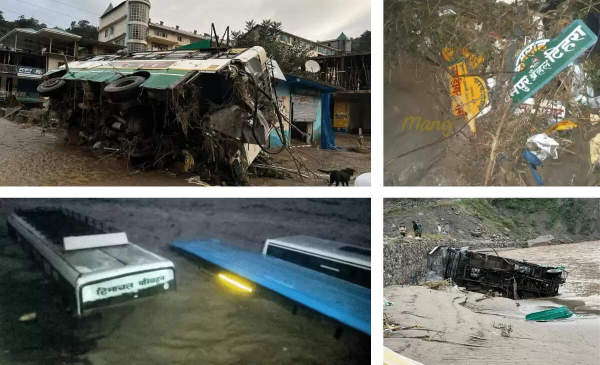
Positioned dangerously close to the Son Khud, the bus stand has faced repeated flooding during heavy rains, resulting in significant financial losses and major disruptions to the local community and businesses.
Financial Toll and Infrastructure Damage
The government has seen minimal returns from this project, suffering losses amounting to crores due to infrastructure damage that far exceeds any potential revenue. A local trader noted that the recent floods have once again inundated the bus stand, causing property damage and halting transportation in the area.
Ignored Warnings and Consequences
The issues trace back to 1998 when the idea of constructing a bus stand near the Son Khud was first proposed. Despite early objections from local leaders regarding the site's vulnerability to flooding, a former minister pushed for the location. In 2009, he even conducted a second foundation-laying ceremony, and by 2012, the bus stand was operational.
By 2015, the entire HRTC staff and fleet had moved from Sarkaghat to Dharampur, comprising 170 employees and 50 buses. Unfortunately, the bus stand has never been secure, with repeated flooding damaging buses, offices, shops, and nearby settlements. The 2023 monsoon season alone saw damages estimated at Rs 10 crore, with the depot inundated during the disaster on June 30.
Relocation: A Necessary Step
In response to growing public dissatisfaction and a new damage report requested by Chief Secretary Prabod Saxena, the current state government has finally opted to move the bus stand to a safer site. Plans are underway to construct a new bus stand on vacant land away from the stream, along with relocating the Dharampur depot office.
Bhupender Singh, a CPM leader and former zila parishad member, has called for criminal charges against officials who approved the no-objection certificate for this ill-conceived project. He emphasized that if the bus stand had not been built in that location, nearly 100 shops and several homes in the Dalit settlement would have been spared from destruction. He remarked, 'This was not a natural disaster but a man-made one, born out of political arrogance.'