माता च पार्वती देवी पिता देवो महेश्वरः।
बन्धवाः शिवभक्ताश्च स्वदेशो भुवनत्रयम्॥
In the heart of Bihar’s winter sky, when birds return home, a story of love and reunion unfolds
Sama Chakeva. This festival isn’t just about rituals; it’s about emotions that travel across distance, silence, and time. It reminds us that no matter how far life takes us, love always finds a way back home just like the migratory birds do every year.
1. The Divine Tale of Sama and Chakeva 
The tale of Sama Chakeva reflects divine sibling love
According to the
Skanda Purana, Sama was the beloved daughter of Lord Krishna and Jambavati. Her life was full of grace until a misunderstanding changed everything. One morning, a man named Chugula saw Sama returning from an ashram and accused her of infidelity. Without knowing the truth, Lord Krishna cursed his own daughter to become a bird. When her husband, Chakeva, heard this, his heart broke. Out of pure love, he too prayed to turn into a bird so he could be with her. Later, her brother Samb, filled with pain and love, prayed to Lord Vishnu to bring them back. His prayers were answered and from that day, people remember the deep love that united the divine siblings forever.
2. How the Ritual Began

Villagers crafting clay figures for the Sama Chakeva ritual
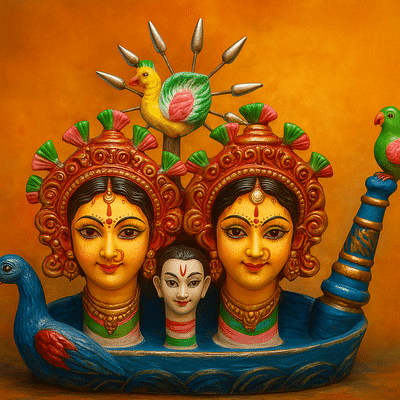
Samb, grateful for his sister’s return, began a ritual to honor her. He asked the women of Mithilanchal to help him create clay idols of Sama, Chakeva, Vrindavan, and even Chugula the symbol of gossip and lies. These idols were placed in
Changeri, a bamboo basket, and taken to the fields every evening. Women sang soulful Maithili songs, narrating Sama’s story. The songs were not just words they were emotions, a reminder that love and truth always win over deceit. As part of the ritual, Chugula’s moustache was burned, symbolizing the end of falsehood and gossip in society.
3. Birds The Living Symbols of Sama Chakeva

People see migratory birds as divine forms of Sama and Chakeva
Every year, when migratory birds fly from the Himalayas to the Mithila plains, people believe Sama and Chakeva have returned. The timing of the festival beautifully coincides with their arrival. Birds like flamingos, teal, sandpipers, and storks fill the skies carrying divine messages of faith and reunion. People feed them, pray for their safe journey, and see them as sacred guests. The festival teaches love not only between humans but also towards nature reminding us that every soul, whether human or bird, is born from the same divine breath.
4. Eight Days of Devotion and Celebration

Sisters celebrate the love and strength of their bond
The festival lasts for eight nights, starting from
Kartik Shukla Panchami and ending on
Kartik Purnima. Each evening, young women gather in the fields carrying their
Changeri. They sing, laugh, and tell the story of Sama and Chakeva under the moonlight. They light a small fire in the beak of the Chugula idol burning away deceit. Songs like Sāma Chake Sāma Chake Abih He, Jotala Kheta Me Baisih He”
fill the air, spreading joy, devotion, and nostalgia. The last day feels emotional as if a daughter is leaving her parental home. Sisters feed their brothers
dahi-chura (curd and beaten rice), praying for their long life, and then immerse the idols in water, symbolizing farewell with love.
5. The Environmental Message Hidden in Faith

Sama Chakeva celebrates love for nature and birds
Beyond the devotion, Sama Chakeva carries a message that’s deeply spiritual and modern protect nature. The people of Mithila believe that harming a bird during this period is like hurting Sama herself. This belief has preserved the bird population in the region for centuries. In a world where we often forget to respect the natural world, this tradition stands as a gentle reminder love should extend beyond humans. Every living being deserves compassion.
6. The Spiritual Heart of Sama ChakevaThe essence of Sama Chakeva lies in forgiveness. Lord Krishna’s curse, Sama’s pain, and Samb’s love all point to one eternal truth misunderstandings destroy, but love heals. In every song sung and every clay bird made, there’s a whisper of divine wisdom that relationships may falter, but hearts that stay pure always find their way back. The burning of Chugula isn’t just symbolic; it’s a lesson to guard our words, to speak with kindness, and to protect the peace within families.
Where Love Takes WingsSama Chakeva is more than a festival; it’s a story of love reborn between brother and sister, humans and birds, hearts and heavens. It reminds us that even when misunderstandings darken our relationships, love can still shine through faith, forgiveness, and devotion. As the winter sky fills with birds returning home, the people of Mithila look up with folded hands whispering a silent prayer that love, like those birds, always finds its way back.
Explore the latest trends and tips in Health & Fitness, Spiritual, Travel, Life Hacks, Trending, Fashion & Beauty, and Relationships at Times Life!