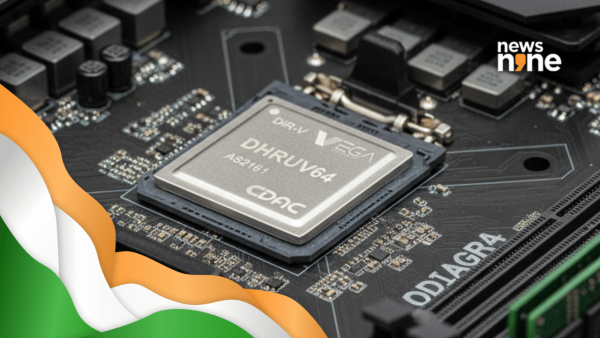
New Delhi: India has added a new chapter to its semiconductor push with the announcement of DHRUV64, described as the country’s first 1.0 GHz, 64-bit dual-core microprocessor. The chip has been developed by C-DAC under the government-backed Microprocessor Development Programme (MDP), marking another step in India’s attempt to reduce dependence on imported silicon.
The announcement was shared through an official government note, positioning DHRUV64 as a processor aimed at telecom, industrial, and strategic technology use cases.
What is DHRUV64
DHRUV64 is a 64-bit, dual-core processor clocked at 1.0 GHz. According to the government briefing, the chip is designed to support multitasking workloads and interface with external hardware required in modern digital systems.
Officials say the processor can be used across sectors such as 5G telecom infrastructure, automotive electronics, consumer devices, industrial automation, and Internet of Things deployments. These are areas where India continues to rely heavily on imported processors.
The note also highlights a key demand-side reality: India consumes nearly 20 percent of the world’s microprocessors, even though domestic manufacturing remains limited.
Built on RISC-V architecture
DHRUV64 is part of the Digital India RISC-V (DIR-V) programme, which focuses on building processors using the open-source RISC-V instruction set architecture.
RISC-V allows chip designers to develop processors without paying licensing fees, a factor the government sees as critical for enabling startups, research institutions, and domestic manufacturers to build custom chips at lower cost.
Under the DIR-V roadmap, earlier processors included THEJAS32, fabricated in Malaysia, and THEJAS64, manufactured at SCL Mohali. DHRUV64 is the third processor announced under this programme.
Role of MeitY and C-DAC
The Ministry of Electronics and Information Technology (MeitY) is overseeing the programme, with C-DAC leading processor design efforts. The government has been pitching these chips as foundational components for telecom equipment, embedded systems, and future digital infrastructure.
Alongside processor development, the Centre is backing broader semiconductor initiatives. The India Semiconductor Mission has cleared projects worth ₹1.60 lakh crore across multiple states, covering fabs, packaging units, and supporting facilities.
Another linked programme, Chips to Startup (C2S), carries an outlay of ₹250 crore and is being implemented across more than 100 academic institutions to build chip design talent.
What comes next
The roadmap shared by officials lists Dhanush and Dhanush+ as the next processors under development after DHRUV64. These chips are expected to expand India’s domestic processor portfolio further.
For the telecom and technology sectors, DHRUV64 is being positioned as a step toward locally designed computing hardware that can eventually find its way into networks, devices, and industrial systems operating inside India. The real test will lie in adoption, production scale, and how quickly these processors move from labs to commercial deployments.