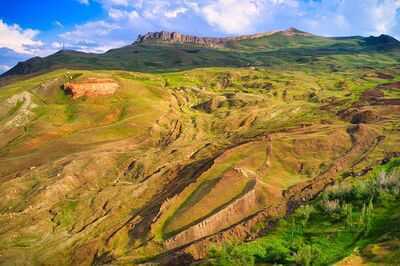
A remarkable archaeological find has been hailed as 'proof' that Noah's Ark really did exist.
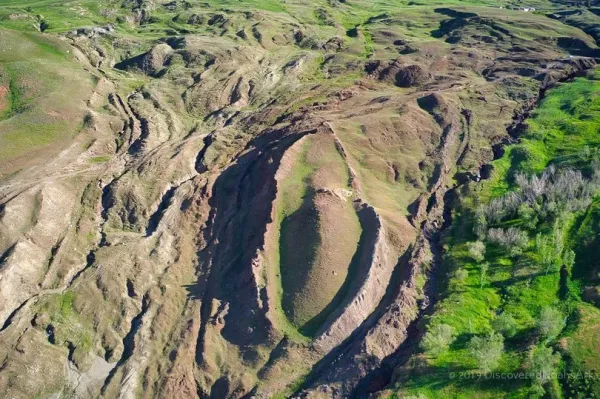
New research at the Durupınar geological site in eastern Turkey - a boat-shaped mound long claimed to be the site of the biblical structure - suggests ancient humans were living at the site around 5,000 years ago.
In the bible, it is said that god instructed Noah to construct the huge ark to house two of every kind of animal, ensuring their survival after the Great Flood.
- Woman says we've been wearing winter coats wrong – 'correct' way is much warmer
- Man makes charity shop purchase and gets a lot more than he bargained for
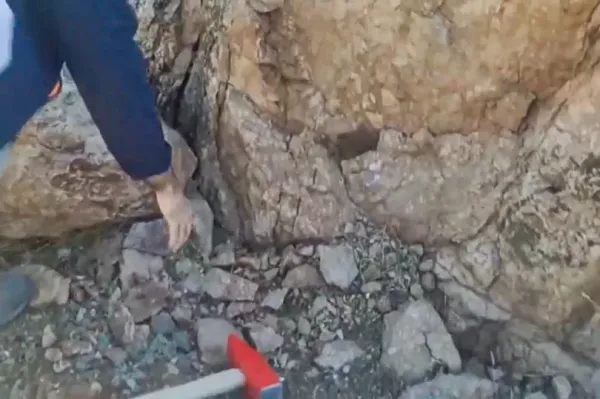
And this week, a team of experts from Istanbul Technical University and Agri Ibrahim Cecen University (AICU) reported the discovery of clay materials and marine remnants within the soil of the mound.
Rock and soil samples uncovered "polygenic" clay materials - complex mixtures of clay, silt, and sand - that are not naturally occuring appear to come from human development, according to AICU's Professor Faruk Kaya.
He said: “The ceramic fragments show that there was human activity in this region. There is no other structure like this identified anywhere else in the world.”
Calling for the site be subject to special protections to stop visitors from disturbing the soil and taking potentially valuable artefacts home, Professor Kaya added: “This formation and its surroundings must be protected, and the removal of sones, rocks or similar material must be prevented.”
The researchers also found evidence of marine organisms, which they say points to the presence of a vessel or human settlement from the Chalcolithic period circa 3000 BC - around the time when some believers say the Great Flood happened.
The professor said: “This period roughly coincides with the time in which Prophet Noah is believed to have lived.“
The Durupınar site, a 157-metre-long formation first discovered by archaeologists in 1959, has been a subject of fierce debate for many decades.
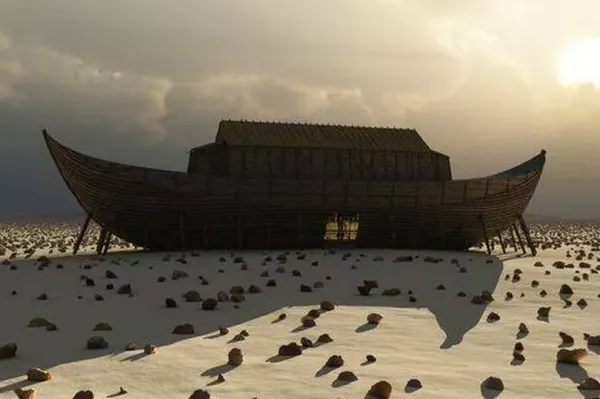
While some believe its shape dimensions match the ark described in the Book of Genesis, the consensus among geologists is that it is in fact the result of a common natural phenomenon, with the "walls" consisting of hardened clay and iron-rich limonite.
In 1996, Lorence Collins from California State University wrote in a research paper that the limestone deposits at the site alleged to be from the Great Flood were in fact younger than the sections said to have belonged to "Ark" - proving that it was a "bogus" claim. Suggesting proponents of the theory were perhaps overlooking clear evidence to the contrary, he said: "The unusual boat-shaped structure would so catch their attention that an eagerness to be persons who either discovered Noah's Ark or confirmed its existence would tend to override caution."