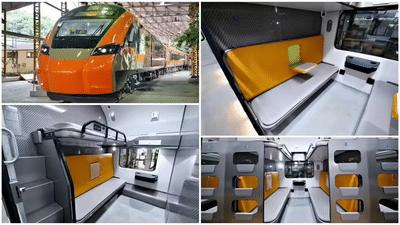
Indian Railways is preparing to transform long-distance rail travel with the introduction of the Vande Bharat Sleeper Train, a next-generation service designed specifically for overnight journeys. After the strong response to Vande Bharat chair car trains on short and medium routes, the Railways is now focusing on sleeper coaches to cater to passengers travelling distances of over 1,500 kilometres.
According to reports, if the first Vande Bharat Sleeper service performs as expected, a New Delhi–Secunderabad Vande Bharat Sleeper Train could be launched in the near future. This move is expected to significantly reduce travel time while offering modern amenities and competitive fares.
Vande Bharat Sleeper Train: A New Chapter in Indian Railways
Until now, Vande Bharat trains have operated primarily with chair car configurations, suitable for daytime travel. However, long-distance routes require overnight comfort, which existing premium trains often fail to deliver efficiently in terms of speed.
The Vande Bharat Sleeper Train has been designed to bridge this gap. With semi-high-speed capabilities and aircraft-inspired interiors, this train aims to complete lengthy journeys in less than 20 hours, a substantial improvement over conventional express and premium services.
This sleeper variant is expected to redefine how passengers experience overnight rail travel by combining speed, comfort, and affordability.
Kolkata–Guwahati to Be the First Sleeper Route
Indian Railways is reportedly planning to roll out the first Vande Bharat Sleeper Train on the Kolkata–Guwahati corridor. This route has been selected due to its heavy passenger demand, long travel duration, and strong economic and cultural ties between eastern and northeastern India.
The introduction of the sleeper service on this route will not only improve connectivity but also serve as a testing ground for future long-distance sleeper routes across the country.
New Delhi–Secunderabad Vande Bharat Sleeper on the Radar
If the Kolkata–Guwahati service proves successful, the Secunderabad–New Delhi route is expected to be among the next corridors to receive a Vande Bharat Sleeper Train. This route connects North and South India and is one of the busiest long-distance rail corridors in the country.
As per planning discussions, Indian Railways aims to introduce around 12 Vande Bharat Sleeper Train services by the end of 2026, positioning them as a faster and more affordable alternative to trains like the Rajdhani Express.
Expected Route of the Secunderabad–New Delhi Sleeper Train
The proposed Vande Bharat Sleeper Train between Secunderabad and New Delhi is expected to pass through several major junctions, ensuring wide regional connectivity. The tentative route includes:
-
Secunderabad
-
Kazipet
-
Balharshah
-
Nagpur
-
Bhopal
-
Jhansi
-
Agra
-
New Delhi
Covering key business, industrial, and passenger hubs, this route is likely to attract both corporate travellers and long-distance passengers.
Modern Facilities and Enhanced Safety
The Vande Bharat Sleeper Train will be built specifically for night travel, offering comfort-focused features not available in chair car versions. Expected highlights include:
-
Fully air-conditioned sleeper coaches
-
Ergonomic berths for restful sleep
-
Modern interiors with improved lighting
-
Hygienic, well-designed washrooms
-
Advanced safety sensors and real-time monitoring systems
-
Smooth suspension for reduced vibration and noise
These features aim to deliver a premium yet practical travel experience.
Coach Composition and Expected Fare Structure
The sleeper train is expected to have 16 coaches, offering multiple travel classes:
-
11 AC 3-tier coaches
-
4 AC 2-tier coaches
-
1 First Class AC coach
As per early estimates, the tentative fare for the Secunderabad–New Delhi journey may be:
-
AC 3-tier: around ₹3,600
-
AC 2-tier: around ₹4,800
-
First Class AC: around ₹6,000
If implemented, these fares would make the Vande Bharat Sleeper Train a cost-effective option compared to other premium long-distance services.
Why the Vande Bharat Sleeper Train Is Important
The introduction of the Vande Bharat Sleeper Train marks a major step toward modernising India’s rail infrastructure. Faster travel, reduced journey time, enhanced comfort, and competitive pricing make it an attractive choice for overnight journeys.
For routes like New Delhi–Secunderabad, this train could offer passengers a reliable alternative to flights and traditional overnight trains. As Indian Railways continues to expand the Vande Bharat network, the sleeper variant is expected to play a key role in shaping the future of intercity rail travel in India.