A host of screening programmes are available on the NHS in an effort to identify cancer early and treat it successfully. This ranges from mammograms to at-home faecal immunochemical tests.
However, eligibility for national screening programmes differs depending on age and geographical location. Ahead of World Cancer Day (February 4), we spoke to Dr Rachel Orritt, health information manager at Cancer Research UK, to examine the objectives of each NHS cancer screening programme and what they involve, helping you determine which ones may be applicable to you.
Cancer screening available on the NHS in the UKBreast screening
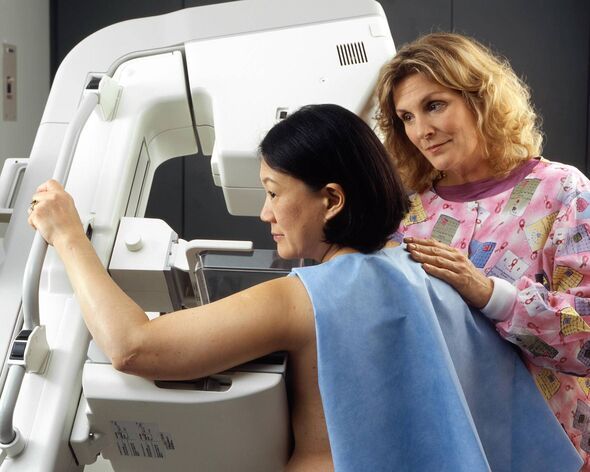
"Breast screening helps to find cancer an early stage, which is when treatment is more likely to be successful," explains Dr Orritt. "It involves a mammogram of your breast or chest that looks for breast cancer, essentially when it's too small to see or feel. "In most cases, people are invited every three years for a breast screening between the ages of 50 and 70."
Nevertheless, you may be eligible for a mammogram at an earlier stage if your risk level is elevated.
"You can have screening at a younger age if your risk is higher, for example if you have family history of breast cancer, or if you have a gene fault that puts you at a higher risk such as BRCA1 and BRCA2 mutation," explains Dr Orritt. "If you are concerned, talk to your GP and they'll be able to help you understand your particular risk and can see if it might be suitable for you to have a breast screening sooner."
A mammogram captures two X-ray images of each breast from different perspectives, one from above and one from the side, she clarifies.
"That X-ray is then reviewed by someone to see if there's any changes in your breast that might mean require further follow-up tests," says Dr Orritt. "You'll receive results after your appointment which will tell you if you need to go back for further tests or not."
Cervical screening
"Anyone who has a cervix will be invited for a cervical screening every five years between the ages of 25 and 64 in Wales, Scotland and England," says Dr Orritt.
However, the process differs slightly in Northern Ireland, where invitations arrive every three years for those aged 25 to 49, before switching to five-yearly intervals until age 64, according to Cancer Research UK's website. She acknowledges that this type of screening can make some people anxious, so she advises discussing any worries or queries with your GP or nurse beforehand.
"A nurse will use a small, soft brush to take a sample of cells from the cervix and then that sample is then tested for HPV, human papillomavirus," explains Dr Orritt. "The reason that it looks for HPV is because high-risk HPV causes almost all cases of cervical cancer. So, by focusing the test on HPV we can pick up people who might be at risk of developing the disease."
If your result shows no HPV, your sample will not undergo testing for cell changes, and if a high-risk strain of HPV is detected, the sample is examined under a microscope for cell changes, according to Cancer Research UK's website. You will be informed of your results and subsequent steps by letter or through the NHS app.
"The main aim for cervical screening is to help prevent cervical cancer from developing in the first place," says Dr Orritt.
Bowel screening
Bowel screening within the NHS employs a test known as a faecal immunochemical test (FIT) to detect blood in a stool sample.
"Bowel screening is offered to people between the ages of 50 and 74 in the UK, however in Northern Ireland it's offered to people aged 60 to 74," says Dr Orritt. "People within these age ranges will automatically receive a FIT kit in the post every two years."
Those aged 75 or above can also access bowel cancer screening every two years, though they must contact the bowel cancer screening helpline on 0800 707 6060 to request the test, according to the NHS website.
"The aim of bowel screening is to help find cancer at an early stage and to also find any changes in the bowel that could lead to cancer," explains Dr Orritt. "Eligible people are sent a poo testing kit that can be done in the privacy of your own home and then is returned safely in the post. That sample is then tested to spot any possible tiny traces of blood in your poo which could be a sign of bowel cancer, or changes in the bowel that could put you in increased risk of bowel cancer."
Lung screening
"The lung screening is for people aged between 55 and 74 who either currently smoke or have smoked in the past," Dr Orritt says. "At the moment it's not currently available at all in Wales, Scotland or Northern Ireland, just England, but Wales do have plans to introduce it. Similar to some of the other screening programmes, it helps find lung cancer at an early stage, when treatment is more likely to be successful."
The targeted lung cancer screening programme remains relatively new, meaning it will likely take time before becoming widely accessible, according to Cancer Research UK's website.
"When it's up and running, anyone between the ages of 55 and 74 who smokes or used to smoke will be invited to take part," Dr Orritt notes. "They will be first invited for a risk assessment and, based on those results, some people will then also be invited to have a CT scan of the lungs if they're deemed to be a higher risk of lung cancer."
"To ensure that you receive your cancer screening invitations, make sure you're registered with a GP and your address details are all up to date," advises Dr Orritt. "In most cases, once you become eligible you will be sent an invitation in the post. However, we're starting to see things like the NHS app notifications be used more, and over the next few years we'll probably see a bit of a move towards digital invites."
If you believe you are eligible but haven't yet received a screening invitation, Dr Orritt recommends getting in touch with your GP.
"It's okay to contact your GP because it might be that your address is wrong or isn't up to date on their records, for example," says Dr Orritt. "There could be a number of reasons for this, and the GP can help investigate that for you."
Do you need to wait for a screening appointment to check whether you have cancer?"One of the main things that I think is really important to get across when we're talking about cancer screening, is that these programmes are for people without any symptoms," highlights Dr Orritt. "If you have symptoms or are worried about something, you don't need to wait for screening invite. Talk to your GP about any concerns straight away."
To discover more about which screenings might be relevant to you, visit screeningchecker.com