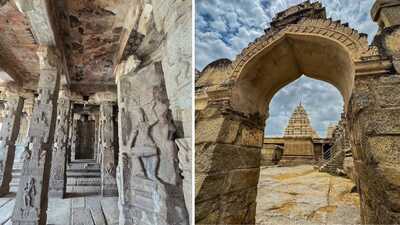
New Delhi: Lepakshi in Andhra Pradesh holds one of India’s most intriguing architectural mysteries inside the Lepakshi Temple, also known as Veerabhadra Temple. Built in the 16th century in the Vijayanagara style, the temple draws visitors for its detailed sculptures, vivid murals, and mythological storytelling carved into stone. Yet it is a single pillar, appearing to float above the floor, that turns this quiet village into a place of curiosity, wonder, and quiet disbelief for travellers who arrive seeking history, faith, and unanswered questions of ancient India.
Beyond the hanging pillar, Lepakshi offers vivid art, legend, and engineering brilliance. Massive frescoes, monolithic sculptures, and epic tales linked to the Ramayana surround the temple complex. Together, they turn Lepakshi into more than a stopover, shaping it as a destination where mythology, craftsmanship, and mystery exist side by side within a sacred landscape shaped by time and devotion. Here’s the detail you need to know about this temple.
Key highlights of Lepakshi Temple Lepakshi Temple settingThe 16th-century Lepakshi or Veerabhadra Temple stands in Lepakshi village in Anantapur district, around 15 kilometres east of Hindupur and nearly 120 kilometres north of Bengaluru. Built under the Vijayanagara Empire, the temple showcases finely carved pillars, walls, and ceilings filled with scenes drawn from the Ramayana, Mahabharata, and Puranas.
India’s largest single-figure frescoOne of the temple’s most striking features is the massive fresco of Veerabhadra painted on the ceiling. Measuring nearly 24 feet by 14 feet, it is considered the largest fresco of a single figure in India, adding to the site’s artistic importance.
Monolithic Nandi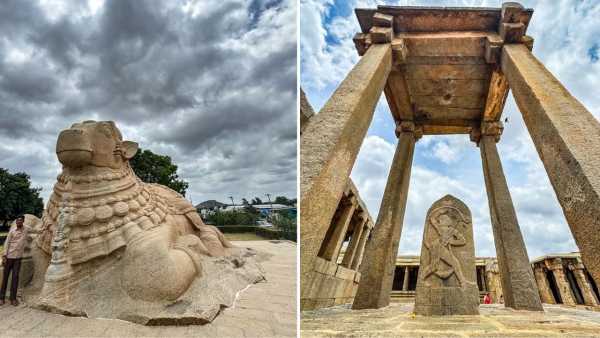
Facing the temple complex is a colossal Nandi sculpture carved from a single stone block. Counted among the largest monolithic Nandi statues in the world, it reflects the advanced stone-carving skills of the Vijayanagara period.
Hanging Pillar mysteryAmong nearly seventy stone pillars inside the temple, one does not fully rest on the ground. Visitors can pass a thin cloth or paper beneath it, creating the illusion of a floating structure. The pillar reportedly shifted slightly when a British engineer attempted to study its support system, adding to its legend.
Builders and beliefHistorical records credit Viranna and Virupanna, governors under King Achutaraya, with constructing the temple. Puranic traditions also link the site to sage Agastya, blending history with belief.
Lepakshi in the RamayanaLepakshi holds a sacred place in the Ramayana. Legend says Jatayu, wounded by Ravana while trying to rescue Sita, fell here. When Rama found him, he spoke the words “Le Pakshi,” meaning “rise, bird,” giving the village its name.
Key attractions within Lepakshi village- Ekashila Nagalingam
- Jatayu Park
- Lepakshi Park and Lotus Pond
- Penukonda Fort
- Puttaparthi
- Nandi Hills
- Ghati Subramanya Temple
- Skandagiri Hills
- Adiyogi Statue
- By air: Bangalore International Airport is the nearest airport, which is 100 km from the Lepakshi temple. You can avail a taxi to Lepakshi temple or can travel by bus to Lepakshi Temple.
- By train: Hindupur railway station is the nearest railway station to the Lepakshi temple, which is only 12 km away.
- By bus: You can travel to the Lepakshi temple by several state and private buses. It is 100Km from Bangalore and 14Km from Hindupur town. And 100Km from Anantapur city.
- Best time to visit: October to March.
The hanging pillar of Lepakshi stands as quiet proof that ancient builders mastered both art and engineering. Long after theories fade, the pillar continues to invite wonder, reminding visitors that some mysteries are meant to be experienced, not solved.