Hyundai is a major player in India’s automotive landscape. It started 2026 on a high note, and posted its highest-ever monthly retails of 73,137 units. This marked a 11.5% year-on-year (YoY) increase. Domestic sales alone stood at 59,107 units, representing a 9.5% increase over the previous year’s numbers. Looks like the company’s big fightback strategy against aggressive rivals like Tata and Mahindra has started fetching results. Things will only get better in the coming months, as Hyundai plans to commence a bunch of promising launches.
Current Rankings
Talking of just the domestic sales, Maruti Suzuki still continues to be India’s most picked car brand. Hyundai, which once used to be the second largest carmaker here, has been pushed to the fourth spot in January this year! At the second spot is Tata Motors, which sold 70,222 units. Mahindra sold 63510 units and stands third. This is an alarming revision in rankings. Hyundai’s proposed comeback plan aims at taking it back to the second spot in the coming months.
Venue & Aura Drive January Sales
Let’s now talk a bit more about the January performance. The recently-launched second-generation Hyundai Venue and the Aura sedan (!) exhibited strong growth in adoption and contributed significantly to the overall numbers. The Venue is, in fact, a key part of the larger growth plan.
What’s Cooking? Hyundai’s Launch Roadmap Explained!
Hyundai has based its fightback on an investment of Rs 45,000 crores. A slew of new launches are expected by 2030. The launch spree will start in 2026. Six launches are expected this year. These will include facelifts of models that are already on sale, generational updates and all-new nameplates.
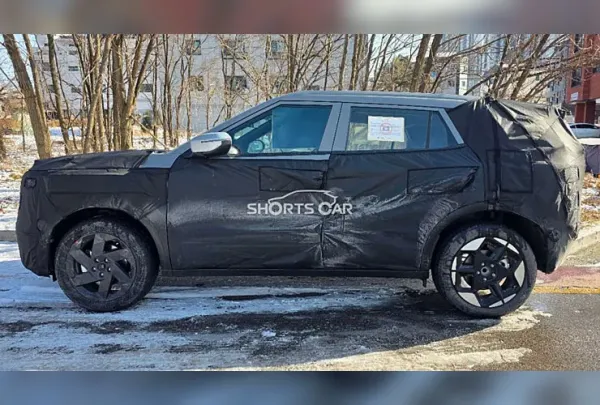
The carmaker will continue to have a strong focus on SUVs. A new ‘mystery SUV’ was recently spied on test in Mumbai. It looked unlike any Hyundai that’s on sale here. Not much detail is known about this model at the time of writing. Going by dimensions, it appears to be something that will sit between the Venue and the Creta, when launched. Time remains before further details of this product surface.
Hyundai’s new Inster-based EV was spotted alongside the mystery SUV, indicating an imminent India launch. This sub-compact electric SUV will be based on the new E-GMP (K) platform and will likely offer 42kWh and 49kWh battery packs, offering range figures of 300km and 355km respectively. It will rival the Tata Punch.EV and Citroen eC3 when launched.

Another SUV launch expected from the Korean is the Exter facelift. The Grand i10 NIOS-based SUV was first launched in 2023. It uses the same engine, gearboxes and platform as the i10. It was first launched in 2023 and the facelift is expected in the first half of this year. Details if changes are sparse at the moment. Subtle design tweaks, and feature additions/ improvements are likely. Engines and transmissions will remain the same as those of the current model.
Hyundai will reportedly bring the second-generation Bayon to India. Unlike the first generation, it will have a more SUV-ish design and will likely feature a 1.2-litre turbocharged petrol engine projected to make around 160hp and 253Nm. This unit will be offered with six-speed manual and seven-speed dual-clutch automatic transmissions. Lower trims are likely to come with i20 N-Line-borrowed 1.0L turbocharged petrol engine. More details are yet to surface.
The new-generation Creta is probably the most important launch for Hyundai. Underpinned by the third-generation K3 platform, it will be larger than the outgoing model. Recent test mule sightings have confirmed that Hyundai will take a new design approach with the new Creta. Even inside, it will have a better equipment array and a better-looking cabin. In addition to the current model’s engines, the new Creta will likely get a new strong hybrid engine as well.
Hyundai also plans to establish a strong foothold in the D-SUV segment in the coming months. It will launch a new three-row, D-segment SUV that will rival the Mahindra 7XO, and Tata Safari when launched, potentially replacing the Tucson.
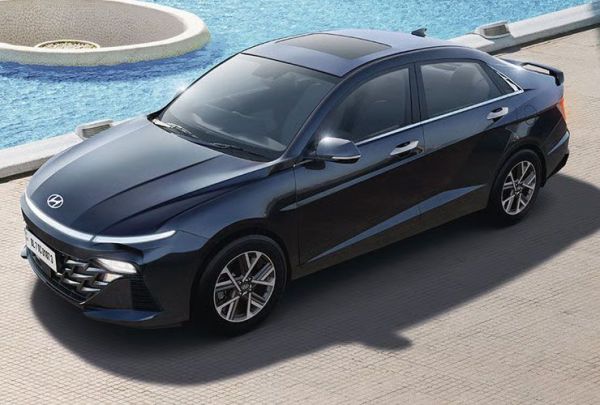
The carmaker will also launch a facelifted Verna this year. The current generation of the sedan was first launched in 2023, and is still in decent demand. The facelift is expected to make its design less-polarising, potentially bringing it closer to that of the latest generation (global) Sonata. Additionally, the update will also add more features to the already tech-laden Verna. Reports also point to the facelift getting Hyundai’s new hybrid petrol engine in addition to the current engines.
Early Predictions
All these said, regaining the second spot will not be easy for Hyundai. The Tata Sierra, Punch facelift, petrol versions of the Harrier and Safari, the upcoming Sierra EV, Mahindra’s EV lineup, XUV 7XO are all competently packaged products and will likely see a steep increase in acceptance in the coming months. Hyundai will have to play smart with both the products and the launch timelines.