I tried Lenovo’s glass-less 3D screen gaming laptop, here’s how it went
Gaming has always been about immersion. From pixelated characters on bulky CRT monitors to ultra realistic open worlds running at 4K, we have all come a long way.
But through every generation of graphics cards and consoles, the basic idea has stayed the same: to offer players an escape into a world where they are in control. Over the years, developers have pushed visual realism, ray tracing, and frame rates to make games look closer to life. And naturally, the next step in that journey became depth. This is not just about better looking worlds, but worlds that feel physically closer to you. And that is where virtual reality steps in.
Through VR games, a player can be as close as possible to a virtual world. All you need to do is find a safe space, put on a headset, and step inside the game itself. And yes, when it works well, it feels magical. But it also comes with trade offs. Headsets can feel bulky, long sessions can get uncomfortable, and you are cut off from everything around you. So when I came across a glass free 3D gaming laptop by Lenovo, I just had to try it. Here is how it went.
Playing Cyberpunk 2077 in 3D without glasses
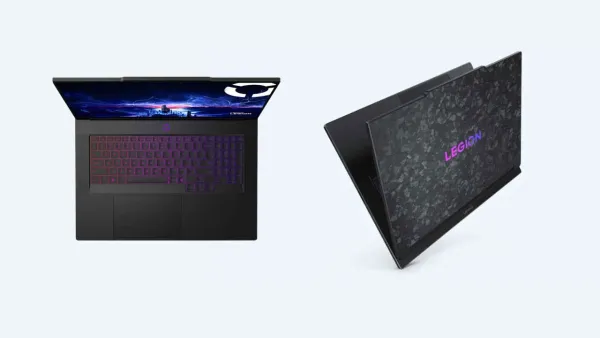
Inside a dimly lit demo room at Lenovo Tech World 2026 held in New Delhi, I finally got to try the new Lenovo Legion 9i with its optional 3D display. The lighting was clearly designed to focus all attention on the 18 inch screen. And it worked. When I first looked at the screen, the depth effect felt almost hypnotising. I stood there for a few seconds just taking it in.
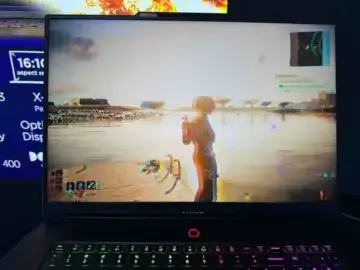 The game running was Cyberpunk 2077, a title I had never played before, and the mission involved preparing for an underwater dive. As my character moved into the water, the sense of depth became obvious. Objects felt layered, the environment looked like it extended beyond the panel, and the water textures looked detailed and convincing.
Was it like full VR? No. I own a PlayStation VR2, so I know what complete headset based immersion feels like. But this was surprisingly close considering I was not having any headset on and was just looking at a laptop screen. However, after about 15 to 20 minutes, I did feel the need to pause. There is clearly a small adjustment period for the eyes and brain. Still, the fact that this works without glasses or a headset makes it far more practical for everyday gaming.
I spent close to 20 minutes with the laptop, and honestly, I was not in a hurry to put it down. The experience pulls you in slowly. The longer I played, the more natural the depth began to feel. But there was a growing line behind me, with people clearly waiting for their turn, so I eventually had to step away. In that short window, though, I walked away impressed. It is not something you instantly adapt to. Your eyes and brain need a little time to adjust to the layered effect. But once you settle in, the immersion genuinely stands out. It feels like an early step into something bigger, and for a first experience, it is a promising one.
What's under the hood?
The Lenovo Legion 9i is not just about the display trick. Announced at Tech World Shanghai 2025, it is built as a full flagship gaming laptop. It runs on an Intel Core Ultra 9 275HX processor and can be configured with up to an Nvidia GeForce RTX 5090 Laptop GPU. Together, the CPU and GPU can push a combined 280W of power. It supports up to 64GB of DDR5 RAM, expandable to 192GB, and PCIe Gen 5 SSD storage.
On the front, the Legion 9i's 18-inch PureSight panel offers up to 4K resolution at 240Hz in 2D mode, with 540 nits brightness and full DCI P3 colour coverage. The optional variant switches between 4K 2D and 2K 3D modes. You also get Nvidia G Sync, Dolby Vision, and VESA DisplayHDR 400 support.
Cooling is handled by Lenovo's Coldfront Vapour system with a vapour chamber and quad fan setup. Even during the demo, the laptop felt stable and controlled.
Final thoughts
All said, the 3D effect on the Legion 9i is not flawless, and it may not replace VR any time soon, especially for players who want complete isolation inside a virtual world. But after trying it for myself, I walked away feeling that this is more than just a gimmick. The idea of experiencing depth without wearing a headset suddenly feels practical, and that alone makes it interesting for everyday gaming setups. It still needs refinement, particularly in comfort during longer sessions, yet the direction feels promising. If Lenovo and game developers continue to polish this approach, glass-free 3D could become a meaningful middle ground between traditional screens and full VR. The Lenovo Legion 9i has not launched in India yet, but its arrival will be worth watching closely.
Read more