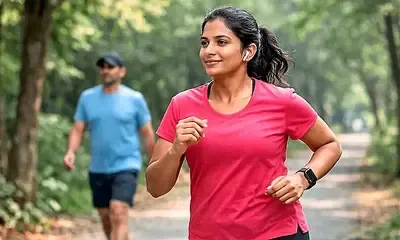
Many people want to look fit and stay healthy. To achieve this, they try walking, running, gym workouts or dance exercises. However, running continuously can feel difficult, especially for beginners. A simple and effective method called Jeffing can make running easier and safer.
What is jeffing?Jeffing is a planned exercise method that combines running and brisk walking. It was popularised by Jeff Galloway, an Olympic runner and coach.
In this method, a person runs for a fixed time and then walks for a short period. This pattern continues throughout the workout. The idea is to reduce fatigue and lower the risk of injury.
One of the most popular formats suggested by Galloway is the 30–30 method:
-
Run for 30 seconds
-
Walk for 30 seconds
-
Repeat
This method helps runners cover longer distances without feeling exhausted.
Why is it called jeffing?The name “Jeffing” became popular through a social media group called Run Mummy Run. Many women who followed Jeff Galloway’s run-walk method began calling it “Jeffing” as a nickname. Today, the term is widely recognised among fitness enthusiasts.
How to practise jeffing?1. Choose the right ratio
-
Beginners: 30 seconds run + 30 seconds walk
-
Intermediate level: 3 minutes run + 1 minute walk
-
Advanced runners: 9 minutes run + 1 minute walk
2. Start from the beginning
Follow the run-walk pattern from the first minute itself. Do not wait until you feel tired.
3. Walk briskly
During the walking phase, do not stroll slowly. Walk at a steady, active pace to maintain heart rate.
4. Run comfortably
Run at a speed where you can still talk. Keep your back straight and arms bent at 90 degrees.
5. Listen to your body
If breathing becomes difficult, reduce running time and increase walking time.
-
Lower injury risk: Walking breaks reduce pressure on joints and muscles.
-
Faster recovery: Muscles do not tire quickly, and post-workout soreness is reduced.
-
Improved stamina: Helps conserve energy and cover longer distances.
-
Weight management: Effective cardio workout that helps burn calories.
-
Better race performance: Even experienced runners use it to maintain steady speed in long races.