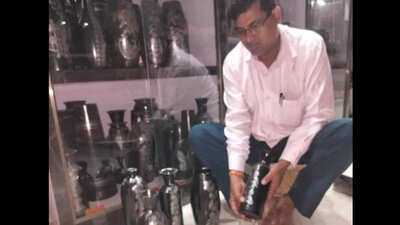
Azamgarh district in Uttar Pradesh is witnessing growing recognition for its traditional black pottery, particularly from the Nizamabad area, where the craft has developed a distinct identity over the years. Known for its glossy black finish and intricate designs, the pottery is increasingly finding demand in both domestic and international markets. The craft is practiced by more than 200 artisans in the region, who produce a wide range of items including vases, utensils, teapots, and decorative pieces. These products are appreciated for their functional use as well as their artistic appeal. The pottery is made using a special variety of locally available clay, which contributes to its uniqueness.
In addition to decorative items, artisans also create clay idols of deities such as Lord Ganesha, Goddess Lakshmi, Lord Shiva, Goddess Durga, and Goddess Saraswati. These items are especially popular during fairs and festive occasions, reflecting a blend of cultural traditions and craftsmanship. A key feature of this pottery is its deep black color, achieved through a specialized process involving clay treatment and controlled firing techniques. Artisans use a mixture of natural elements and specific finishing processes to give the products their signature shine. Recent developments in infrastructure have also contributed to the growth of this sector. The establishment of a Common Facility Centre has provided artisans with access to modern equipment, raw materials, and packaging support.
This has helped improve production efficiency and enabled them to handle larger orders more effectively. The initiative is linked to broader policy measures such as the One District One Product (ODOP) scheme, introduced under the leadership of Chief Minister Yogi Adityanath. The program focuses on promoting region-specific products by offering training, financial assistance, and market access. Artisans have reported improved business outcomes following these developments, with better opportunities to reach wider markets. The continued demand and support systems are contributing to sustaining this traditional craft while adapting it to modern market needs.