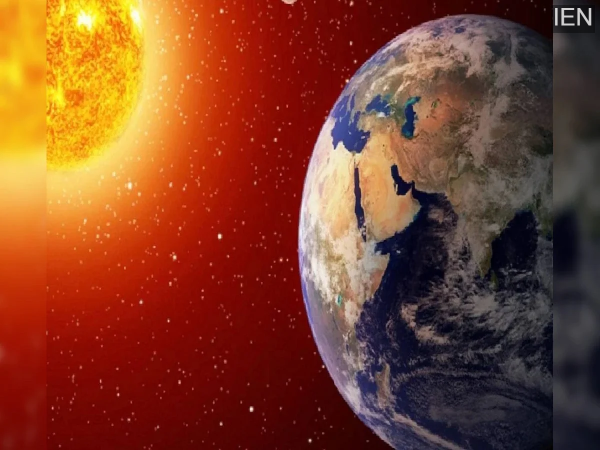
The Sun is the most important star in our solar system, acting as the central force around which all planets—including Earth—orbit. It provides the light and heat necessary for life to exist, making it the foundation of our planet’s ecosystem. But one question that often sparks curiosity is: how far is Earth from the Sun?
Understanding this distance also helps explain how our solar system works and why Earth is perfectly positioned to support life. Here’s a detailed and easy-to-understand explanation.
Why the Sun Is Crucial for Earth
The Sun is the primary source of energy for our planet. It powers weather systems, supports plant growth through photosynthesis, and maintains temperatures suitable for life. Without the Sun, life on Earth would not be possible.
Average Distance Between Earth and the Sun
On average, Earth is about 149.6 million kilometers (approximately 93 million miles) away from the Sun. This distance is not random—it plays a key role in maintaining a stable climate on our planet.
What Is an Astronomical Unit (AU)?
Scientists use a standard measurement called the Astronomical Unit (AU) to describe distances within the solar system.
- 1 AU = 149.6 million kilometers
- It represents the average distance between Earth and the Sun
This unit makes it easier for astronomers to calculate and compare distances between planets and other celestial bodies.
Why the Distance Changes Throughout the Year
Earth does not orbit the Sun in a perfect circle. Instead, its orbit is slightly elliptical (oval-shaped). Because of this, the distance between Earth and the Sun changes slightly over the course of a year.
Closest Point: Perihelion
- Occurs in January
- Earth is at its closest distance from the Sun
- Slightly less than the average distance
Farthest Point: Aphelion
- Occurs in July
- Earth is at its maximum distance from the Sun
- Slightly more than the average distance
How Long Does Sunlight Take to Reach Earth?
Light travels extremely fast—at about 300,000 kilometers per second. Even at this speed, sunlight takes approximately:
- 8 minutes and 20 seconds to reach Earth
This means when you see sunlight, you are actually seeing the Sun as it was over 8 minutes ago.
The Perfect Balance for Life
The distance between Earth and the Sun is often referred to as being in the “Goldilocks Zone”—not too close and not too far. This perfect balance allows liquid water to exist and creates conditions suitable for life to thrive.
Final Thoughts
The distance between Earth and the Sun is more than just a number—it’s a key factor that makes life on our planet possible. From maintaining temperatures to supporting ecosystems, this delicate balance highlights the incredible design of our solar system.
Understanding these basics not only answers a common question but also deepens our appreciation of the universe we live in.