Bananas are berries, but strawberries are not: Here's why
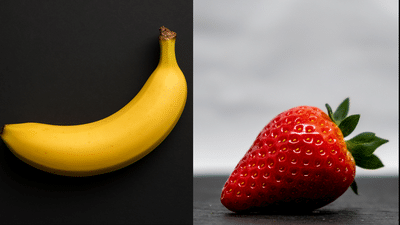
Have you ever thought why bananas are called berries from a botanical point of view, whereas strawberries aren’t? This question might seem funny, but there is a scientific explanation behind it. While in popular terminology, fruits are categorised according to their flavour and looks, scientists categorise fruits depending on how they grow from the flowers. The discrepancies between common and scientific terminology lead to some unusual outcomes. Besides helping us resolve this mystery, this knowledge will allow us to understand how exciting and interesting plant biology is. Now let’s try to figure out what distinguishes bananas from strawberries. As it turns out, the answer lies in the structure of the ovary and how the fruit develops, revealing a fascinating side of botanical classification.
What makes a berry: Botanical definition of berry fruits
In botany, a berry is a type of fruit that grows from the single ovary of the plant flower and normally has numerous seeds contained inside fleshy pulp. The definition provided by the states that “berries are fruits that are produced from a single ovary, usually with several seeds embedded in the flesh.”
As a result, bananas, grapes, and tomatoes all fall under the classification of being true berries. Bananas are included in this classification since they develop from a single flower and the ovary of it, while at the same time, they consist of soft fleshy pulp with seeds.
Berry, in botany, a fleshy fruit having numerous seeds, such as grapes, tomatoes, and bananas.
Why bananas are considered ‘true berries’
The banana fruit fully fits into the biological description of a berry. It grows from a single ovary and is made up of three parts: the peel, the soft pulp, and the inner part that contains seeds. As per , despite the absence of seeds in today’s varieties of bananas due to artificial cultivation methods, they are considered berries based on their botanical makeup.
Botanical studies confirm that commercially grown bananas are “parthenocarpic,” a term used to describe fruits that develop without undergoing fertilisation. This does not affect their classification as berries.
In layman's language, a true berry consists of:
Why strawberries are not botanically berries
Strawberries, despite their name, fail the botanical test. They are classified as “aggregate fruits,” meaning they form from a flower with multiple ovaries. Each tiny “seed” on the outside of a strawberry is actually an individual fruit called an achene.
The previously mentioned study by the University of California states, “A strawberry is not a berry but an aggregate fruit… each ‘seed’ on the outside is actually a separate fruit.”
Unlike true berries, strawberries do not develop from a single ovary. On the other hand, berries consist of several structures that differentiate them from strawberries.
Key difference explained in simple terms
Everything hinges on flowers and fruits:
Even though the logic in science might appear self-defeating, it actually follows the reproductive mechanism of the plants rather than their taste and looks.
All in all, it becomes clear that the debate about bananas vs. strawberries shows how science challenges the accepted knowledge. Thus, the next time you eat a banana, keep in mind that it is a berry indeed!
What makes a berry: Botanical definition of berry fruits
In botany, a berry is a type of fruit that grows from the single ovary of the plant flower and normally has numerous seeds contained inside fleshy pulp. The definition provided by the states that “berries are fruits that are produced from a single ovary, usually with several seeds embedded in the flesh.”
As a result, bananas, grapes, and tomatoes all fall under the classification of being true berries. Bananas are included in this classification since they develop from a single flower and the ovary of it, while at the same time, they consist of soft fleshy pulp with seeds.
Berry, in botany, a fleshy fruit having numerous seeds, such as grapes, tomatoes, and bananas.
Why bananas are considered ‘true berries’
The banana fruit fully fits into the biological description of a berry. It grows from a single ovary and is made up of three parts: the peel, the soft pulp, and the inner part that contains seeds. As per , despite the absence of seeds in today’s varieties of bananas due to artificial cultivation methods, they are considered berries based on their botanical makeup.
Botanical studies confirm that commercially grown bananas are “parthenocarpic,” a term used to describe fruits that develop without undergoing fertilisation. This does not affect their classification as berries.
In layman's language, a true berry consists of:
- 1 flower
- 1 ovary
- Soft flesh inside
Why strawberries are not botanically berries
Strawberries, despite their name, fail the botanical test. They are classified as “aggregate fruits,” meaning they form from a flower with multiple ovaries. Each tiny “seed” on the outside of a strawberry is actually an individual fruit called an achene.
The previously mentioned study by the University of California states, “A strawberry is not a berry but an aggregate fruit… each ‘seed’ on the outside is actually a separate fruit.”
Unlike true berries, strawberries do not develop from a single ovary. On the other hand, berries consist of several structures that differentiate them from strawberries.
Key difference explained in simple terms
Everything hinges on flowers and fruits:
- Banana: One ovary = Berry
- Strawberry: Several ovaries = Aggregate fruit
Even though the logic in science might appear self-defeating, it actually follows the reproductive mechanism of the plants rather than their taste and looks.
All in all, it becomes clear that the debate about bananas vs. strawberries shows how science challenges the accepted knowledge. Thus, the next time you eat a banana, keep in mind that it is a berry indeed!
Read more