Find out the secret behind oats that makes them the top food choice for lowering cholesterol.
Reviewed by Dietitian Jessica Ball, M.S., RD
Key Points
- Oats are a popular whole-grain breakfast option.
- They have many health benefits and may help with lowering cholesterol.
- Oats can be incorporated into your meals and snacks in many ways.
As a registered dietitian, I often get asked about my go-to list of foods. One food I always mention is oats. There’s nothing like a steaming bowl of hot oatmeal with nuts and berries to comfort my soul on a gloomy morning. The goodness of oats goes beyond comfort, though. Research suggests that regularly eating oats may reduce total and LDL (harmful) cholesterol—and lower cholesterol levels are associated with a reduced risk of heart disease. So, what is so unique about oats?
What Are Oats?
Oats are the seeds of oat grass. They are whole grains that consist of the seed, including the bran, which houses the majority of the dietary fiber; the germ, which is packed with vitamins and minerals; and the endosperm, which contains the starch.
Commonly eaten as a breakfast food, oats are also milled into flour for breads, cereals and pasta, and rolled into flakes and used as an ingredient for baked goods, including cookies, scones and muffins. Oats could also be blended with water to make creamy, non-dairy oat milk.
Oats are highly nutritious. Every half-cup serving offers 150 calories, 5 grams of protein, 2.5 grams of fat (2 grams of which are healthy unsaturated fats) and 4 grams of dietary fiber.
Eating whole grains, in general, provides several health benefits, including lowering your cholesterol, maintaining a healthy weight and reducing your risk for heart disease and cancers. Here are a few more benefits of regularly eating oats.
Oat Health Benefits
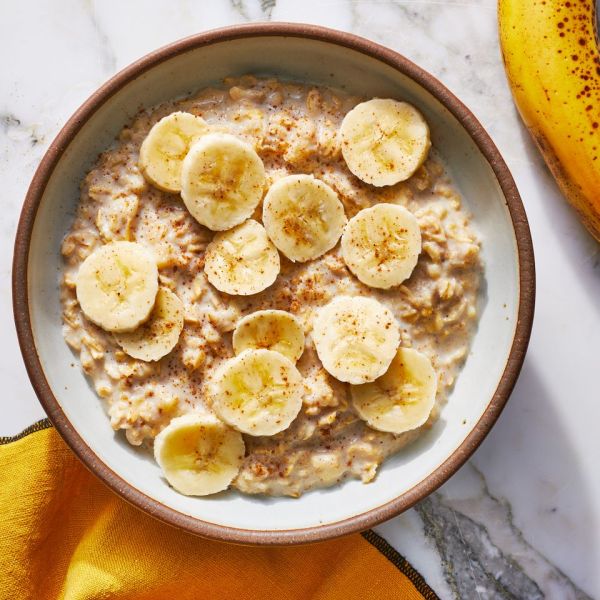
Pictured Recipe: Banana Oatmeal
Healthy Heart
Oats are one of the most researched foods when it comes to heart health. This is partly thanks to its beta-glucan, a type of soluble fiber present in oats. Soluble fiber dissolves in water, turning into a gel and acting as a sponge that binds to cholesterol and fats, removing them from the bloodstream to be excreted. Each half-cup of oats contains 2 grams of soluble fiber, which means that by regularly eating them, you’re well on your way to a healthier heart.
Stable Blood Sugar
The soluble fiber in oats can help stabilize your blood sugar by slowing down digestion and the release of glucose into your bloodstream. By eating oats, especially when combined with protein, you are less likely to experience sudden spikes and dips in your blood sugar level.
Healthy Waistline
Research suggests that regularly eating oats has many potential benefits, including for waist circumference. While researchers have yet to definitively pinpoint why, this effect might be explained by the soluble fiber’s ability to absorb water. Eating whole grains, like oats, creates a satiating effect, creating a feeling of fullness sooner compared to eating refined grains. Feeling fuller sooner means you might eat less.
Types of Oats
Keep in mind that benefits to cholesterol levels come from consuming about 30 grams of dietary fiber daily, long-term. Fiber comes from whole grains, as well as vegetables, fruits, nuts, seeds and legumes. Eating fiber-rich foods also needs to be combined with other recommendations from the American Heart Association, including incorporating regular physical activity into your routine.
Oats come in different varieties and are processed to varying degrees for palatability, digestibility and cooking time. The less processed the oats are, the more cooking time is required.
Oat groats are the least processed among all types, with only the outer hull removed. Known for their chewiness, they require soaking before cooking.
Steel-cut oats are similar to oat groats, except they are cut into two to three pieces. Like the groats, they are also chewy in texture and require extended cooking time.
Rolled oats are processed differently from steel-cut oats. Rather than being cut into pieces, they are steamed, pressed with a roller and then dried. Because of their shape, preparation time is significantly reduced, with no soaking required. Unlike steel-cut oats, rolled oats provide a creamy texture.
Quick-cooking oats are rolled oats cut into smaller flakes, which further reduces the cooking time.
Instant oats are cooked and dried oat groats, which are then cut into thin flakes. Because the oats are cooked during processing, they soften once combined with a hot liquid. While instant oats provide convenience, many varieties available are added with sugar and salt. If you’re going the instant oats route, choose ones that are low in sugar and salt, or unflavored, which have no added sugar (but may have a little bit of added salt). By choosing so, you can add your own ingredients, such as frozen fruits and unsalted nuts and seeds.
Oat bran is the outer layer that covers the groat. Medium brown in color and rich in flavor, it is abundant in fiber, with one 1/2-cup serving providing 116 calories, 8 grams of protein and 7 grams of dietary fiber. You can boost the fiber content in your cereal by adding a tablespoon or two of oat bran to your cereal or favorite smoothie. You can also increase the fiber content in your homemade breads and cakes with oat bran.
While oats can stabilize your blood sugar level, keep in mind that their effect on your blood sugar will vary, depending on the oat variety you eat. The less processed the oats are, the lower they rank on the glycemic index. The glycemic index measures how fast or slow the food is absorbed and, consequently, how quickly it increases the blood sugar level. Oat groats and steel-cut oats have a lower glycemic index than rolled oats and instant oats, since groats and steel-cut oats take longer to digest and release into the bloodstream. Eating your oats with protein—like milk, yogurt or nuts—will also help slow their roll into the bloodstream.
Our Expert Take
Oats are a versatile whole grain that offer numerous health benefits, including lowering cholesterol. You can eat them as a whole food or add them to a wide array of recipes. Oats are versatile and can be eaten on the sweeter or savory side. If you’re not already, start incorporating oats into your meal rotations, and you may start benefiting from their cholesterol-lowering abilities.