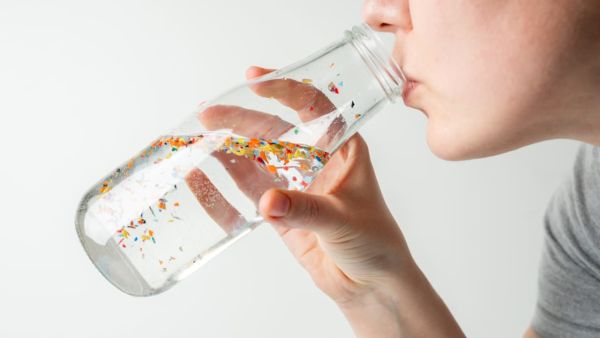
Could a common kimchi probiotic be the key to fighting nanoplastic pollution in our bodies? A new study reveals how a specific bacterium traps and removes these tiny plastics.
Scientists in South Korea have found that a probiotic bacterium often found in kimchi might help the body get rid of harmful nanoplastics. The study suggests this bacterium could trap small plastic particles inside the intestine and help remove them through waste. The results were published in the journal Bioresource Technology, which is one of the leading journals in agricultural engineering.

The study was conducted by experts at the World Institute of Kimchi and was led by Dr Se Hee Lee and Dr Tae Woong Whon.
Tiny Plastics
Nanoplastics are very small plastic pieces that measure less than one micrometre. These particles form when larger plastic items break down over time. Scientists say they can enter the human body through food and drinking water.
Researchers are concerned because these tiny plastics may pass through the intestinal wall and accumulate in organs like the kidneys and brain. Scientists are still looking for safe biological methods to reduce the buildup of these particles in the body.
Kimchi Bacteria
The research team studied a bacterium found in kimchi called Leuconostoc mesenteroides CBA3656. They tested how well it could stick to polystyrene nanoplastics in a lab setting.
The results were encouraging. The kimchi-based strain had an adsorption efficiency of 87 per cent, just a little higher than the comparison strain, Latilactobacillus sakei CBA3608, which had an efficiency of 85 per cent.
However, the biggest difference was seen when scientists recreated conditions similar to the human intestine. The comparison strain’s ability to bind with nanoplastics dropped significantly to only 3 per cent, while the kimchi strain still had a strong adsorption rate of 57 per cent. Researchers said this showed that the bacterium could continue trapping nanoplastics inside the digestive system.
Research Findings
The team also tested the probiotic on germ-free mice. Both male and female mice given the kimchi bacterium passed more than twice as many nanoplastics in their faeces compared to mice that didn’t receive the probiotic.
According to the researchers, these findings suggest that microbes in fermented foods may do more than help with digestion. They could also help the body in dealing with environmental pollutants. Dr Se Hee Lee mentioned that plastic pollution is now a major public health issue, and traditional fermented food microbes might offer a new biological approach to address this growing problem.